

Design of 8-mer peptides that block *Clostridioides difficile* toxin A in intestinal cells
S. Sarma, C. M. Catella, et al.
Explore these studies to deepen your understanding
Adjacent work that informs or extends this paper's methodology and findings.

Development of a novel testis-on-a-chip that demonstrates reciprocal crosstalk between Sertoli and Leydig cells in testicular tissue
S. Park, M. G. Kook, et al.
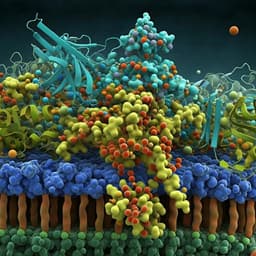
MFRP is a molecular hub that organizes the apical membrane of RPE cells by engaging in interactions with specific proteins and lipids
A. Tworak, R. Smidak, et al.
A type I interferon footprint in pre-operative biopsies is an independent biomarker that in combination with CD8+ T cell quantification can improve the prediction of response to neoadjuvant treatment of rectal adenocarcinoma
A. Rezapour, D. Rydbeck, et al.
Dietary prebiotics promote intestinal *Prevotella* in association with a low-responding phenotype in a murine oxazolone-induced model of atopic dermatitis
A. Laigaard, L. Krych, et al.


