logo
ResearchBunny Logo
The role of heart rate variability in sports physiology (Review)

Health and Fitness

The role of heart rate variability in sports physiology (Review)

J. Dong

Heart rate variability (HRV) reveals cardiac balance between sympathetic and vagal control and is emerging as a tool to track athletes' training adaptation and optimize training loads. This review offers a comprehensive assessment of HRV–ANS interrelations and its role in sports physiology. This research was conducted by Jin-Guo Dong.... show more
Introduction

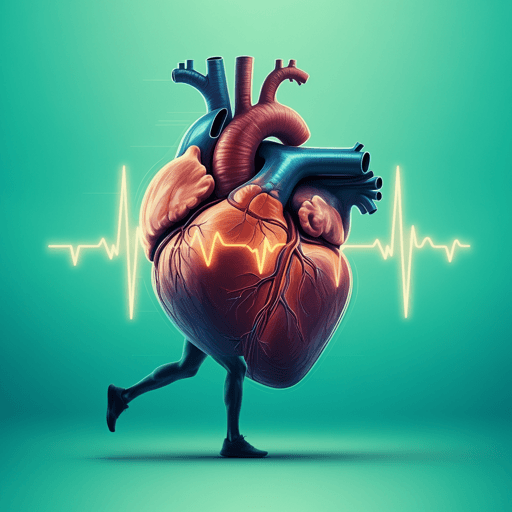
The heart is a specialised pump that functions by regular and continuous contractions for delivery of blood throughout the body. The pumping action is caused by a flow of electricity through the heart that repeats itself in a cycle, known as heart rate (HR) or heart pulse. HR is the speed of the heartbeat measured by the number of contractions per unit of time. HRV refers to oscillations in heart cycle duration over time and is generally considered the measure of regulatory influences, mainly of the autonomic nervous system (ANS). Vagal-mediated HRV indices are inversely associated with several risk factors for diabetes, glucose intolerance, insulin resistance, central obesity, dyslipidemia and hypertension. While HRV has been largely applied to predict sudden cardiac death and diabetic neuropathies, recent studies demonstrate its application in exercise training to monitor the time course of training adaptation/maladaptation and to set optimal training loads. The present review examines the autonomic regulation of the heart and its relationship with HRV, as well as the relevance of HRV use in sport training considering training intensity, athlete level, gender and age, and the use of HRV to monitor and improve sports physiology.

Literature Review

The review synthesizes studies comparing ANS function and HRV profiles between sedentary individuals and athletes across different modalities, generally showing higher overall HRV and elevated parasympathetic cardiac modulation in trained athletes. It summarizes frequency-domain (LF, HF, LF/HF) and time-domain (SDNN, RMSSD, PNN50) responses to varying exercise intensities, durations, and training methods, including evidence that HRV spectra vary with ventilatory thresholds and can indicate sympathetic predominance below VT and parasympathetic predominance above VT. Age and gender influence cardiac vagal activity and HRV responses, with youth showing higher vagal activity at rest and endurance athletes demonstrating elevated parasympathetic tone over 24 h recordings. Post-exercise recovery studies demonstrate characteristic changes in HRV (e.g., decreases in HFn, SD1, SD2, SDNN immediately after maximal exercise, timing of return to baseline linked to VO2max). Team sport contexts show sensitivity of HRV to training load with suggestions to average multiple measures weekly to improve detection of changes; ultra-short-term HRV (1-min acquisition after 1-min stabilization) appears sensitive to training effects. Interval versus constant intensity training elicit different early recovery autonomic patterns, though late recovery (24–48 h) depends more on total exercise volume. HRV-guided training prescriptions in moderately active individuals can maintain or improve fitness by adjusting daily intensity according to HRV. HRV is also used to monitor overtraining (OT), functional overreaching (FOR), and non-functional overreaching (NFOR), with characteristic reductions in frequency and time-domain measures, typologies of fatigue identified via supine-standing HRV patterns, and threshold values proposed for early warning in elite athletes.

Methodology

As a narrative review, no single experimental protocol was implemented; instead, the paper details HRV measurement and analysis approaches commonly used in sports physiology research: ECG-based detection of R peaks and computation of R-R (N-N) intervals; time-domain metrics including SDNN (standard deviation of all N-N intervals) and RMSSD (root mean square of successive differences), and PNN50; Poincaré plot descriptors SD1 (beat-to-beat, primarily parasympathetic) and SD2 (longer-term variability, mixed sympathetic-parasympathetic); frequency-domain analysis of LF (0.04–0.15 Hz; mixed sympathetic and parasympathetic), HF (0.15–0.40 Hz; predominantly parasympathetic), normalized units (LFn, HFn) and LF/HF ratio. Respiratory influences are acknowledged, with recommended control/acceptance of breathing frequencies (e.g., 6–15 breaths/min) and self-organized respiratory patterns during recordings. Exercise-testing contexts referenced include protocols below and above ventilatory threshold (VT) with concurrent measurement of VO2, VCO2 and lactate; recovery analyses immediately post-exercise (minutes to hours) and late recovery (24–48 h); orthostatic HRV tests (supine-standing) for fatigue/overreaching typology; ultra-short-term HRV acquisition (1-min) for daily monitoring in team sports. Data acquisition positions (supine vs standing), durations (short-term vs 24 h), and standardization needs (intensity, duration, body position) are emphasized for interpretability.

Key Findings
  • Trained athletes generally exhibit higher overall HRV and greater parasympathetic modulation than sedentary controls; high-intensity training can shift modulation toward sympathetic predominance at peak loads.
  • HRV varies with ventilatory threshold: LF/HF > 1 below VT (sympathetic predominance) and < 1 above VT (parasympathetic predominance); absolute LF, HF, and total power are higher at moderate intensity than at high intensity (Cottin et al.).
  • During onset of physical activity, R-R intervals become shorter and more uniform due to increased sympathetic activity and vagal withdrawal; HRV indices provide actionable information on physiological stress and fatigue.
  • Age and fitness influence vagal modulation: SD1 normalized is higher at rest in young adults (24–34 y) than middle-aged (35–46 y) and elderly (47–64 y); differences diminish post-exercise. Poor fitness is associated with impaired cardiac vagal function during low- to moderate-intensity exercise.
  • Endurance and team athletes show elevated parasympathetic tone over 24 h (higher RMSSD, PNN50, HF; lower LF/HF).
  • Post-exercise recovery in cross-country skiers (~36 y, 75 km race): HFn, SD1, SD2, SDNN decreased on day 1; HFn returned to baseline by day 2; LFn reduced near/below pre-exercise by day 2; recovery time inversely correlated with VO2max.
  • Early recovery (5 min to 1 h) depends on training allocation: HF higher after constant intensity vs interval training; parasympathetic return is slower after interval training; late recovery (24–48 h) depends on total exercise volume.
  • Ultra-short-term HRV (1-min recording post-1-min stabilization) is sensitive to training adaptations in team sports (e.g., futsal).
  • HRV-guided daily endurance training in moderately fit individuals over 4 weeks to 2 months can maintain/improve fitness by adjusting intensity when HRV is decreased; effects less reproducible in non-trained or lower ability subjects.
  • Overtraining (OT), FOR/NFOR detection: OT associated with decreases in TP, LF, HF, RMSSD, SDNN; some cases show hyper-responsiveness; shifts between sympathetic (LF) and vagal (HF) predominance reported; typology of fatigue via posture changes; in elite female wrestlers, weekly supine HRV detected 7 NFOR and 2 FOR cases across 11 competitions.
Discussion

The compiled evidence indicates HRV is a practical, non-invasive proxy for cardiac autonomic regulation in athletes, sensitive to both acute and chronic training loads. By capturing sympathetic-vagal balance through time- and frequency-domain metrics, HRV monitoring can track adaptation/maladaptation, inform daily training prescriptions, and optimize recovery schedules. The relationship between HRV patterns and ventilatory thresholds supports its use for intensity calibration during training. Age, gender, and conditioning status modulate HRV responses, underscoring the need for individualized interpretation. Post-exercise recovery dynamics in HRV provide insight into autonomic reactivation kinetics and the influence of training modality and total volume. Importantly, HRV serves as an early indicator of overreaching and overtraining states, enabling preemptive adjustments to prevent performance decline. Together, these findings address the review’s objective by demonstrating how HRV operationalizes the internal load-response of athletes and guides sports physiology practice.

Conclusion

HRV is a non-invasive method that yields valuable data on physiological changes in response to physical activity. Multiple studies show HRV parameters are relevant for analyzing training-induced stress and understanding recovery. In athletes, altered HRV patterns reflecting ANS changes can help manage fatigue, establish exercise intensity, personalize training loads and recovery times, and avoid OT and NFOR, thereby supporting performance optimization. Standardized protocols for HRV research and application in athletes should be established, considering exercise intensity and duration, body position during recording, and recording duration. Ultra-short-term HRV (1 min after stabilization) may improve the practicality of daily cardiac autonomic monitoring. Routine HRV monitoring following workouts is crucial to optimize recovery and prevent excessive fatigue accumulation during preparation or competition.

Limitations

Interpretation of HRV is complicated by respiratory influences; breathing frequency and pattern significantly affect HRV and require control or standardized acceptance. There is a lack of universally standardized protocols across studies regarding exercise intensity, duration, recording posture (supine vs standing), and recording duration, limiting comparability and generalizability. Age, gender, and conditioning status are confounding factors that influence autonomic control and HRV responses. Some HRV-guided training benefits are less reproducible in non-trained subjects or those with lower physical ability. Post-exercise HRV dynamics can be modality- and volume-dependent, complicating uniform prescriptions. Variability in instruments and acquisition procedures (e.g., ECG vs heart rate monitors) may affect measurement accuracy.

Listen, Learn & Level Up
Over 10,000 hours of research content in 25+ fields, available in 12+ languages.
No more digging through PDFs, just hit play and absorb the world's latest research in your language, on your time.
listen to research audio papers with researchbunny