logo
ResearchBunny Logo
Social Media Algorithms and Teen Addiction: Neurophysiological Impact and Ethical Considerations

Psychology

Social Media Algorithms and Teen Addiction: Neurophysiological Impact and Ethical Considerations

D. De, M. E. Jamal, et al.
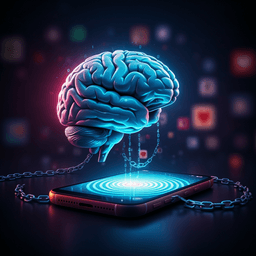
How many hours on Instagram reshape teenage brains? This review shows prolonged social media use alters dopamine-driven reward circuits and activity in the prefrontal cortex and amygdala, fostering addictive behaviors amplified by AI-personalized algorithms. Solutions and ethical guidance for preventing adolescent addiction are provided. Research conducted by Debasmita De, Mazen El Jamal, Eda Aydemir, and Anika Khera.... show more
Introduction

Social media has become a global phenomenon with over 5 billion active users in 2024, projected to exceed 6 billion by 2028. Adolescents are heavy users: 93–97% of teens aged 13–17 use at least one platform, with girls aged 16–24 spending more than three hours daily and boys about two and a half hours. Concerns about increasing social media addiction among teens have grown alongside legal scrutiny (e.g., a multistate lawsuit against Meta alleging intentional design of addictive features for youth). Terminology varies (problematic social media use, social media disorder, Facebook addiction/dependence), and there is no consensus definition; social media addiction is generally characterized by excessive, compulsive use and an uncontrollable urge to browse constantly. Related constructs include internet addiction and smartphone addiction, both linked to anxiety, depression, ADHD, stress, low self-esteem, and diminished psychological well-being. Notably, apart from internet gaming disorder, social media addiction is not a formal diagnosis in DSM-5 or ICD-11. Platforms leverage frequent updates, notifications, and infinite feeds alongside machine learning (e.g., NLP, regression, clustering) to tailor content and increase engagement, fostering addictive behaviors. Adolescents are developmentally sensitive to rewards and perceptual awareness challenges, making them vulnerable to compulsive use and its consequences. Ethical concerns stem from AI-driven algorithms designed to maximize profit and engagement, with substantial ad revenues from children, and the potential for targeted harmful content that exacerbates anxiety and depression. This review aims to analyze how social media fosters addictive behaviors via the brain's reward system, outline structural and cognitive brain changes, address ethical issues, and propose intervention strategies to mitigate adverse effects in adolescents.

Literature Review

The review synthesizes evidence on two major domains: (1) neurobiological mechanisms of addiction relevant to social media and (2) structural and cognitive brain impacts associated with problematic internet/smartphone/social media use, alongside ethical considerations. Regarding reward circuitry, the mesolimbic dopamine system (ventral tegmental area–nucleus accumbens) underlies reinforcement and addiction; social media exploits this by personalized, algorithm-driven content that increases dopamine release and reinforces extended use. Adolescents may exhibit genetic susceptibilities (e.g., dopamine D2 receptor-related variations) and are trapped in a loop of desire, anticipation (likes, tags, comments), and reinforcement, potentially leading to reduced reward sensitivity. Structural and functional alterations reported include increased grey matter volume in the bilateral putamen and right nucleus accumbens, decreased orbitofrontal cortex volume, reduced anterior cingulate cortex activity, prefrontal changes and frontostriatal imbalance (heightened sensitivity to stimuli, reduced inhibitory control), amygdala volume reductions linked to impulsivity, and cognitive impairments (self-monitoring, memory, organization, time management). The I-PACE model integrates person, affect, cognition, and execution processes explaining how internet use affects attention, mood, emotion regulation, and inhibitory control. Behavioral outcomes include higher risk-taking in internet gaming disorder, sleep disturbance worsened by fear of missing out and bedtime smartphone use (melatonin suppression and circadian disruption). Ethical concerns include design features optimizing engagement and addictive potential, extensive data collection for targeted ads/content, lack of transparency and informed consent, and privacy risks, particularly for teens. The review also outlines potential solutions: user well-being-first design, break features, customizable content controls, and transparency around data use and algorithms.

Methodology
Key Findings
  • Adolescents are disproportionately engaged with social media: 93–97% of teens aged 13–17 use at least one platform; girls 16–24 average >3 hours/day; boys ~2.5 hours/day.
  • Scale and monetization: >5 billion users globally in 2024; US children (0–17) generated ~$11 billion in social media ad revenues in 2022.
  • Algorithms and engagement: AI-driven personalization (e.g., NLP, regression, clustering) tailors content to maximize attention and screen time, reinforcing dopamine-driven reward cycles and fostering addictive behaviors.
  • Dose-response link to depression: Meta-analysis shows a 13% increase in depression incidence among adolescents for each additional hour spent on social media per day.
  • Neurobiological correlates of problematic use: • Increased grey matter volume in bilateral putamen and right nucleus accumbens; decreased orbitofrontal cortex volume. • Reduced neural activity in the anterior cingulate cortex; prefrontal cortex alterations with frontostriatal imbalance. • Reduced amygdala grey matter volume linked to impulsivity and emotion dysregulation.
  • Cognitive and behavioral impacts: impairments in self-monitoring, memory, organization, time management; heightened risk-taking due to reward processing dysregulation and impaired impulse control; sleep quality degradation via fear of missing out and bedtime smartphone use (melatonin suppression, circadian desynchronization).
  • Adolescent vulnerability: heightened sensitivity to rewards, developmental factors, and potential genetic variations in dopamine-related pathways.
  • Longitudinal associations noted: lower responsiveness in vmPFC, mPFC, PCC, and right inferior frontal gyrus during adolescence linked to increased social media addiction symptoms >2 years later.
  • Prevalence/context snapshots: 96% of Canadian adolescents use social media; problematic use estimates include 7.38% in European adolescents and 4.5% in Hungarian adolescents.
Discussion

Findings indicate that social media platforms, optimized by AI algorithms, systematically engage the brain’s reward circuitry, reinforcing dopamine-mediated behaviors and promoting compulsive use, especially in adolescents whose neural systems are still developing and exhibit heightened reward sensitivity. Reported structural and functional brain changes (OFC, ACC, amygdala, basal ganglia, prefrontal networks) and cognitive impairments (attention, inhibitory control, executive functioning, sleep disruption) align with addiction models such as I-PACE, providing a mechanistic basis for observed associations with mental health outcomes (e.g., depression risk increases with time spent online). The algorithmic amplification of engagement creates a feedback loop—personalized content boosts reward activation, leading to extended screen time and deeper reinforcement—compounding vulnerability in teens. Ethical implications are substantial: data-driven personalization without adequate transparency, large-scale data harvesting, and design choices that prioritize profit over user well-being raise concerns about privacy, consent, and safety. Addressing these challenges requires shifting platform incentives toward user health, implementing break-promoting features and content controls, enhancing transparency about data and algorithms, and integrating parental guidance and media literacy to build resilience in youth.

Conclusion

Adolescents are particularly prone to social media overuse and addiction, which are associated with depression, anxiety, and detrimental health effects. The review highlights neurobiological mechanisms (dopamine pathways) and structural/functional changes (prefrontal cortex, amygdala, ACC, basal ganglia) that underpin addictive behaviors and impaired decision-making and emotion regulation. It emphasizes the role of machine learning algorithms in optimizing engagement and perpetuating addiction, and raises ethical concerns about privacy, transparency, and consent. Actionable recommendations include parental guidance (shared spaces, limits during meals/sleep, promotion of physical activities), peer-led support groups, early media literacy education, and platform-level reforms prioritizing user well-being and transparency in algorithmic operations and data use. Future work should include longitudinal studies to clarify causal pathways, investigations across diverse age groups and cultures, and research into individual differences (e.g., pre-existing mental health conditions) to inform targeted interventions and policy.

Limitations

The review focuses on neurobiological changes without differentiating effects across age groups, cultures, or individual differences (e.g., pre-existing mental health conditions). Emphasis on adolescents overlooks other at-risk populations. Heavy reliance on secondary data and previously published studies may not capture rapidly evolving platforms and algorithms. Lack of longitudinal data limits causal inference about how social media addiction influences brain development over time. The absence of a standardized diagnostic category for social media addiction in DSM-5 and ICD-11 further complicates interpretation and generalizability.

Listen, Learn & Level Up
Over 10,000 hours of research content in 25+ fields, available in 12+ languages.
No more digging through PDFs, just hit play and absorb the world's latest research in your language, on your time.
listen to research audio papers with researchbunny