logo
Loading...
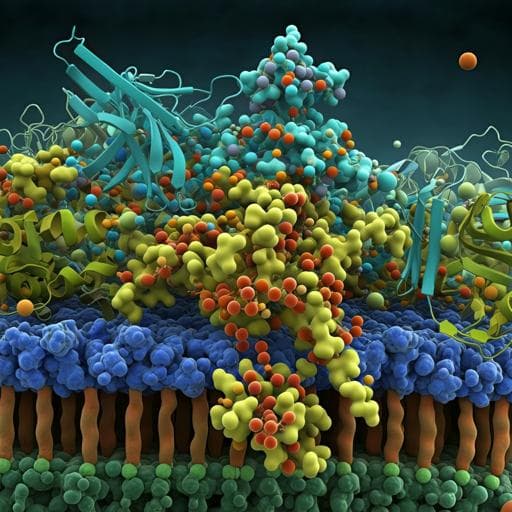
MFRP is a molecular hub that organizes the apical membrane of RPE cells by engaging in interactions with specific proteins and lipids
Medicine and HealthProceedings of the National Academy of Sciences

MFRP is a molecular hub that organizes the apical membrane of RPE cells by engaging in interactions with specific proteins and lipids

A. Tworak, R. Smidak, et al.

Discover how the absence of Membrane frizzled-related protein (MFRP) in the retinal pigment epithelium (RPE) leads to significant ocular issues like hyperopia and retinitis pigmentosa. This research, conducted by a team at the Gavin Herbert Eye Institute, unveils MFRP's critical role in retinal health and offers insight into potential gene therapy outcomes.... show more
Abstract
Membrane frizzled-related protein (MFRP), present in the retinal pigment epithelium (RPE), is an integral membrane protein essential for ocular development and the normal physiology of the retina. Mutations in MFRP are associated with autosomal recessive nonsyndromic nanophthalmos, leading to severe hyperopia and early-onset retinitis pigmentosa. While several preclinical gene-augmentation and gene-editing trials hold promise for future therapies aimed at stopping degeneration and restoring retinal function, the molecular mechanisms involved in MFRP biology are still not well understood. Here, we studied the biochemical properties of MFRP and the molecular consequences of its loss of function in the retinal degeneration 6 (rd6) mouse model. Using transcriptomic and lipidomic approaches, we observed that accumulation of docosahexaenoic acid (DHA) constitutes a primary defect in the MFRP-deficient RPE. In biochemical assays, we showed that MFRP undergoes extensive glycosylation, and it preferentially binds lipids of several classes, including phosphatidylserine and phosphatidylinositol-4-phosphate; as well as binding to several transmembrane proteins, notably adiponectin receptor 1 (ADIPOR1) and inward rectifier potassium channel 13 (KCNJ13). Moreover, MFRP determines the subcellular localization of ADIPOR1 and KCNJ13 in the RPE in vivo. This feature is altered by MFRP deficiency and can be restored by gene-therapy approaches. Overall, our observations suggest that MFRP constitutes an important interaction hub within the apical membrane of RPE cells, coordinating protein trafficking and subcellular localization within the RPE, and lipid homeostasis within the entire retina.
Publisher
Proceedings of the National Academy of Sciences
Published On
Apr 18, 2025
Authors
Aleksander Tworak, Roman Smidak, Carolline Rodrigues Menezes, Samuel W. Du, Susie Suh, Elliot H. Cho, Sanae S. Imanishi, Zhiqian Dong, Dominik Lewandowski, Kristen E. Fong, Gabriela Grigorean, Antonio F. M. Pinto, Qianlan Xu, Dorota Skowronska-Krawczyk, Seth Blackshaw, Yoshikazu Imanishi, Krzysztof Palczewski
Tags
MFRPretinal pigment epitheliumnanophthalmosgene therapylipid homeostasisbiochemical propertiesmouse model
Listen, Learn & Level Up
Over 10,000 hours of research content in 25+ fields, available in 22+ languages.
No more digging through PDFs, just hit play and absorb the world's latest research in your language, on your time.
listen to research audio papers with researchbunny