logo
ResearchBunny Logo
Challenges and opportunities of Facebook during bereavement: experiences from Taung in South Africa

Sociology

Challenges and opportunities of Facebook during bereavement: experiences from Taung in South Africa

K. Aiseng

Explore how Facebook reshapes bereavement in a traditional Taung community: a study by Kealeboga Aiseng examines challenges—emotional shock, lack of sensitivity, misinformation, cultural dilution—and opportunities—fast news sharing, ongoing emotional support, and memory-sharing—arguing social media can complement, not erode, African bereavement practices.... show more
Introduction

Social media has significantly transformed information flow, communication, activism, and social connection, enabling rapid sharing of news, photos, and videos and fostering global networks and movements. With pervasive digital connectivity, death has become a constant presence on social platforms, where grief and social support increasingly take shape online; memorial practices and continued bonds with the deceased are visible through posts such as "RIP" and tributes on platforms like Facebook. Facebook’s vast user base means profiles of deceased users will accumulate and may outnumber living accounts in coming decades, complicating distinctions between the living and the dead online. While social media offers spaces for mourning and memorialization, challenges include insensitive or exploitative content. In this context, focusing on Taung, a culturally traditional community, the study seeks to understand how Facebook is used during bereavement and asks: What opportunities and challenges are presented by social media during bereavement?

Literature Review

Prior research shows social media affects relational development and loss, providing venues for grieving, mourning, and coping (memorial websites, web cemeteries, and social platforms). Scholars examine digital mediation of death, commemoration, and memorialization, including how the dead act as social actors on social networking sites and the role of online social support in grief. Benefits include exchanges of hope, validation of grief, resource provision, psychological support, and continued bonds that can improve grief outcomes. Social media’s accessibility and anonymity enable expression, community formation across distance, and support for disenfranchised grievers, with grief rituals and traditional mourning adapted to online environments. Death and grief have become increasingly public and spectacular through media, marking the 21st century with pervasive death. However, challenges include uncontrolled posts creating unintended memorials, unhelpful advice fostering dependence on sites, and potential isolation from face-to-face support.

Methodology

The study employed a qualitative design using semi-structured, in-person interviews to explore experiences with Facebook during bereavement in Taung. Ethical approval was granted by the researcher’s institution; participants received contact details for grief counseling, provided informed consent, and were assured anonymity and confidentiality. The researcher adopted a verstehen approach to gain empathetic insight into participants’ perspectives and cultural context. Recruitment used the researcher’s personal Facebook account and snowball sampling; three participants were known to the researcher and referred seven others. Inclusion criteria considered age (20–65), educational background, cultural and technological knowledge, and being from Taung. Interviews covered Facebook usage frequency, practices for announcing death, and perceptions of reporting processes. All interviews were conducted in Setswana and English, lasting 30–45 minutes. Ten participants (five males, five females) had prior experience with Facebook during family bereavement; to minimize risk, individuals directly affected (e.g., immediate next of kin) were not recruited, and all had experienced a death at least one year before participation. Facebook was selected due to its widespread, cross-age use in Taung and relative affordability and simplicity compared with other platforms. Data were analyzed thematically.

Key Findings

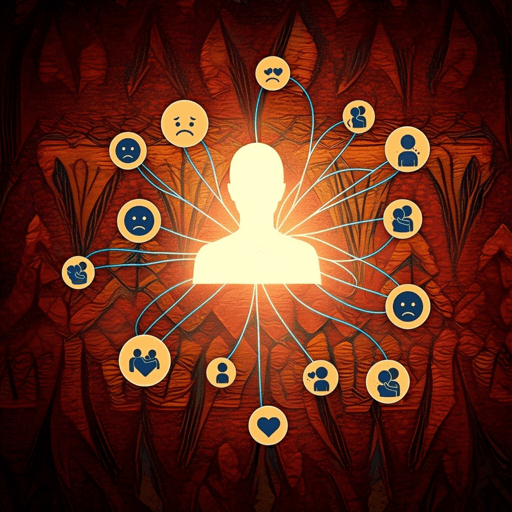
Participants identified four main challenges of using Facebook during bereavement: 1) Emotional shock—learning of a loved one’s death online without preparatory, in-person support can be traumatizing; elders traditionally break news gently with supportive rituals. 2) Lack of sensitivity—users may post graphic accident images or premature announcements without regard for families’ feelings, suggesting a need for platform moderation of explicit content. 3) Cultural dilution—Facebook practices were perceived as undermining African cultural norms around the sacredness of death, appropriate roles of elders, and protection of children from direct exposure to death-related content. 4) Misinformation—rumors and false reports (e.g., incorrect cause or premature death announcements) can mislead, stigmatize families, induce panic, and enable scams (e.g., fraudulent donation appeals). Opportunities highlighted include: 1) Fast news sharing—rapid dissemination to distant or unknown family members, lower cost and time burden relative to travel or calls. 2) Ongoing emotional support—comments, private messages, shared scriptures, and community interaction provide psychosocial support and connectedness during grief. 3) Sharing of memories—posts, photos, and continued interactions with a decedent’s profile sustain bonds, aid closure, and keep memories alive. Overall, Facebook is seen as both a valuable tool for communication and support and a source of emotional, cultural, and informational risks.

Discussion

Findings address the research question by evidencing how Facebook simultaneously facilitates and complicates bereavement within a traditional African community. The platform’s affordances—rapid communication, communal support, and memorialization—constitute an emerging mode of sociality in grief. Yet tensions arise from embedded Western-oriented values and platform norms that may clash with Taung’s cultural expectations around elders’ roles, respectful ritualization, and protection of vulnerable persons. This techno-sociality can induce emotional and cultural disintegration when insensitive content or misinformation spreads, highlighting the need to align digital practices with local norms. Facebook functions as an environment for emotional expression, ritualization, and support, but requires culturally conscious use to complement, not erode, African beliefs and practices. The study contributes to literature by foregrounding African-context perspectives on digital bereavement, showing Facebook as a contested space where norms and values are preserved and renegotiated.

Conclusion

Facebook plays a dual role during bereavement in Taung: it enables fast communication, emotional support, and memory sharing, yet introduces risks of emotional shock, insensitivity, cultural dilution, and misinformation. The study expands understanding of social media’s function in African bereavement contexts and underscores the importance of culturally respectful, dignified digital practices that complement traditional rituals. Future research should employ larger, more diverse samples across multiple African communities and contexts to enhance generalizability and explore interventions, platform policies, and community guidelines that harness social media’s benefits while mitigating harm. Efforts should focus on using social tools to preserve and transmit African cultural values in the global digital environment.

Limitations

The study’s small sample size (n=10) limits generalizability. The research was conducted in a specific community (Taung) at a particular time; cultural and social factors may differ across contexts, constraining transferability. Future studies should include larger samples and comparative analyses across different African villages and cultural settings.

Listen, Learn & Level Up
Over 10,000 hours of research content in 25+ fields, available in 12+ languages.
No more digging through PDFs, just hit play and absorb the world's latest research in your language, on your time.
listen to research audio papers with researchbunny