logo
ResearchBunny Logo
Algorithmic unconscious: why psychoanalysis helps in understanding AI

Interdisciplinary Studies

Algorithmic unconscious: why psychoanalysis helps in understanding AI

L. M. Possati

This paper by Luca M. Possati explores the intriguing intersection of psychoanalysis and artificial intelligence, arguing that AI systems are not merely engineering feats but social actors that reflect human desires. Experience a fresh perspective on technology through a psychoanalytic lens.... show more
Abstract
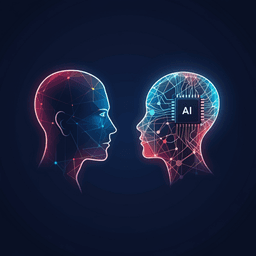
The central hypothesis of this paper is that the concepts and methods of psychoanalysis can be applied to the study of AI and human/AI interaction. The paper connects three research fields: machine behavior approach, psychoanalysis and anthropology of science. In the “Machine behavior: research perspectives” section, I argue that the behavior of AI systems cannot be studied only in a logical-mathematical or engineering perspective. We need to study AI systems not merely as engineering artifacts, but as a class of social actors with particular behavioral patterns and ecology. Hence, AI behavior cannot be fully understood without human and social sciences. In the “Why an unconscious for AI? What this paper is about” section, I give some clarifications about the aims of the paper. In the “Unconscious and technology. Lacan and Latour” section, I introduce the central thesis. I propose a re-interpretation of Lacan’s psychoanalysis through Latour’s anthropology of sciences. The aim of this re-interpretation is to show that the concept of unconscious is not so far from technique and technology. In the “The difficulty of being an AI” section, I argue that AI is a new stage in the human identification process, namely, a new development of the unconscious identification. After the imaginary and symbolic registers, AI is the third register of identification. Therefore, AI extends the movement that is at work in the Lacanian interpretation of the mirror stage and Oedipus complex and which Latour’s reading helps us to clarify. From this point of view, I describe an AI system as a set of three contrasting forces: the human desire for identification, logic and machinery. In the “Miscomputation and information” section, I show how this interpretative model improves our understanding of AI.
Publisher
PAGE Communications
Published On
Apr 24, 2020
Authors
Luca M. Possati
Tags
Psychoanalysis
Artificial Intelligence
Human-AI interaction
Behavioral patterns
Latour's anthropology
Lacanian theory
Social sciences
Listen, Learn & Level Up
Over 10,000 hours of research content in 25+ fields, available in 12+ languages.
No more digging through PDFs, just hit play and absorb the world's latest research in your language, on your time.
listen to research audio papers with researchbunny