
Medicine and HealthPLOS Biology
Thalamic spindles and Up states coordinate cortical and hippocampal co-ripples in humans
C. W. Dickey, I. A. Verzhbinsky, et al.
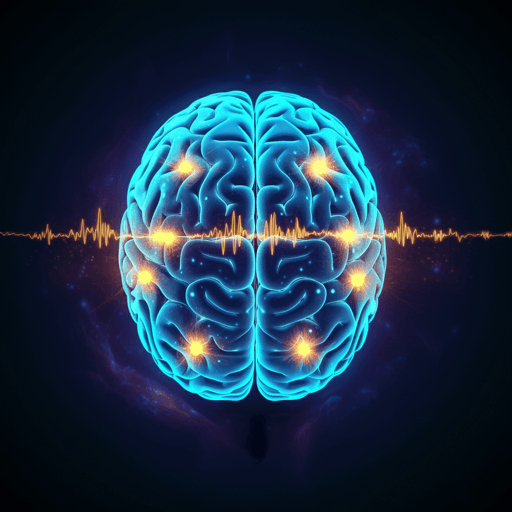
Using human intracranial recordings during NREM sleep, research conducted by Charles W. Dickey, Ilya A. Verzhbinsky, Sophie Kajfez, Burke Q. Rosen, Christopher E. Gonzalez, Patrick Y. Chauvel, Sydney S. Cash, Sandipan Pati, and Eric Halgren found that the thalamus produces ~90 Hz ripples but these rarely co-occur with cortical or hippocampal ripples; instead, propagating thalamic spindles and Up states coordinate widespread co-rippling that may integrate information for memory consolidation.
Related Publications
Explore these studies to deepen your understanding
Adjacent work that informs or extends this paper's methodology and findings.

Psychology
Hippocampal sharp-wave ripples correlate with periods of naturally occurring self-generated thoughts in humans
T. Iwata, T. Yanagisawa, et al.

Environmental Studies and Forestry
Economy-wide evaluation of CO₂ and air quality impacts of electrification in the United States
J. E. T. Bistline, G. Blanford, et al.
Veterinary Science
Adaptation, spread and transmission of SARS-CoV-2 in farmed minks and associated humans in the Netherlands
L. Lu, R. S. Sikkema, et al.

Earth Sciences
Climate and land use changes explain variation in the A horizon and soil thickness in the United States
Y. Zhang, A. E. Hartemink, et al.


