Medicine and Health
Social Media Algorithms and Teen Addiction: Neurophysiological Impact and Ethical Considerations
D. De, M. E. Jamal, et al.
Social media has become a global phenomenon driven by rapid expansions in Facebook, Instagram, YouTube, Snapchat, and TikTok. In 2024, the number of active social media users worldwide has surpassed 5 billion and is projected to reach over 6 billion by 2028. Most disturbingly, however, is the sudden increase in social media addiction that affects the most vulnerable teenagers and leaves them most prone to its negative influences. Studies show that almost a third of all social media users are adolescents and young adults, while 93-97% of teenagers aged 13 to 17 years use at least one form of social media. Adolescent girls aged 16 to 24 years spend more than three hours daily on social media, while boys of the same age group spend approximately two and a half hours. Social media use has become integral to adolescents' lives and heavily influences their perception of peer acceptance and social identity, often with limited parental supervision.
Several terminologies have been used to define social media addiction—problematic social media use (PMSU), problematic social networking site use (PSNSU), social media disorder, Facebook addiction, and Facebook dependence—yet a common consensus on its definition remains elusive. Generally, social media addiction is defined as excessive and compulsive use characterized by an uncontrollable urge to browse social networking sites constantly. Some researchers include both internet addiction (IA) and smartphone addiction (SPA) under social media addiction. IA is the inability to control internet and computer use, interfering with daily life and linked to anxiety, depression, ADHD, stress, low self-esteem, and diminished psychological well-being. SPA is excessive smartphone use that interferes with daily activities and creates anxiety, anger, and social isolation. Despite diverse terms and conceptualizations, there is no consensus on what constitutes a definition of social media addiction. Except for internet gaming disorder, social media addiction is not listed as a standard diagnosis in DSM-5 or ICD-11.
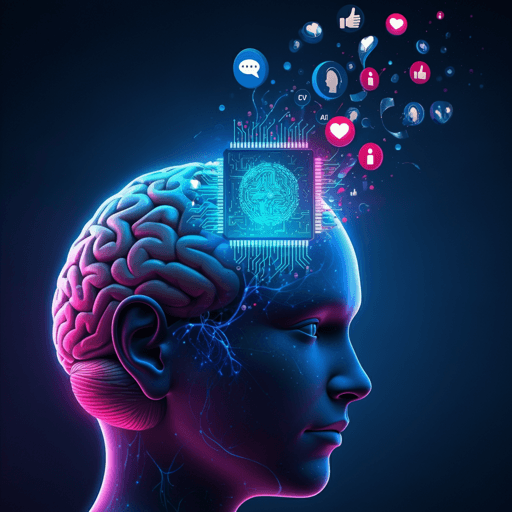
The problem is growing with widespread smartphone adoption and platforms using frequent updates, notifications, and endless scrolling feeds that distract users and create partial attention. Advanced machine learning algorithms analyze user behavior and sentiments to personalize content and optimize real-time feeds, increasing engagement and fostering addictive behaviors. Adolescents are particularly susceptible to compulsive internet use due to developmental sensitivities to rewards and struggles with perceptual awareness. Ethical concerns have escalated, including lawsuits alleging platforms intentionally design addictive features targeting youth. Understanding the adverse impacts of social media on developing adolescent brains is essential. This article discusses how social media leverages the brain's reward system to foster addictive behaviors, examines structural and cognitive brain changes, highlights ethical issues, and proposes intervention methods to prevent adverse effects.
The review synthesizes evidence on neurobiological and cognitive mechanisms underpinning social media, internet, smartphone, and gaming addictions among adolescents and young adults. It outlines how the mesolimbic reward system (ventral tegmental area and nucleus accumbens) mediates dopamine-driven reinforcement seen in both substance and behavioral addictions, with social media platforms exploiting digital footprints and machine learning to deliver personalized, salient rewards (likes, tags, comments) that sustain use. Genetic variations (e.g., dopamine D2 receptor-related) may increase vulnerability to online gaming addiction.
Structural neuroimaging studies associate problematic internet use and smartphone addiction with increased grey matter volume in the bilateral putamen and right nucleus accumbens, decreased orbitofrontal cortex volume, and reduced activity in the anterior cingulate cortex. Functional and cognitive models (I-PACE) describe how excessive internet use alters attention, mood, emotional regulation, and inhibitory control, increasing sensitivity to cues and weakening executive control. Consequences include impairments in self-monitoring, memory retention, organizational skills, time management, and increased risk-taking due to reward processing dysregulation and diminished inhibitory mechanisms. Fear of missing out correlates with social media addiction and poorer sleep quality; late-night smartphone use further reduces melatonin and disrupts circadian rhythms. Addiction to social networking sites is linked to reduced amygdala grey matter volume, implicating emotion and impulsivity.
The review also addresses ethical dimensions: platforms are optimized for engagement via AI-driven personalization, extensive data collection (personal details, browsing history, location, purchasing habits), and targeted advertising, raising concerns about privacy, transparency, and informed consent, especially for teenagers.
- Adolescents and young adults constitute a major segment of social media users; 93–97% of teens (13–17 years) use at least one platform; girls aged 16–24 spend >3 hours daily vs. boys ~2.5 hours.
- Engagement-optimizing algorithms (NLP, regression, clustering) personalize feeds to increase screen time and foster addictive behaviors.
- Dopamine-mediated reward pathways (mesolimbic system: VTA → nucleus accumbens) underpin behavioral addictions; social media exploits these circuits via personalized, intermittent rewards (likes, tags, comments), reinforcing compulsive use.
- Genetic susceptibilities (e.g., dopamine D2 receptor-related) may increase vulnerability to adolescent online gaming addiction.
- Structural brain alterations associated with addiction: increased grey matter volume in bilateral putamen and right nucleus accumbens; decreased orbitofrontal cortex volume; reduced anterior cingulate cortex activity; reduced amygdala volume linked to impulsivity and emotion dysregulation.
- Cognitive and executive impacts: impaired attention, inhibitory control, decision-making, self-monitoring, memory retention, organizational skills, and time management; heightened sensitivity to cues and risk-taking behaviors.
- Sleep and circadian effects: social media addiction and fear of missing out correlate with poorer sleep; bedtime smartphone use reduces melatonin and desynchronizes circadian rhythms.
- Ethical and societal metrics: US children (0–17) generated $11 billion in advertising revenues (2022); widespread data harvesting for targeted content raises privacy and informed consent concerns.
- Dose-response evidence: a 13% increase in depression incidence per additional hour spent on social media among adolescents.
- High prevalence measures: 96% of Canadian adolescents use social media; problematic use estimates include 7.38% in European adolescents and 4.5% in Hungarian adolescents.
The evidence reviewed indicates that social media platforms, through AI-driven personalization, intensify activation of dopamine reward pathways and diminish executive control functions, creating a feedback loop that sustains compulsive use among adolescents. Structural and functional brain changes (in prefrontal, striatal, ACC, and amygdala regions) align with impaired decision-making, emotional regulation, and increased risk-taking, directly addressing the question of how prolonged social media engagement can foster addiction-like behaviors. The dose-response relationship between time online and depression risk underscores clinical relevance. Ethical issues—data surveillance, opaque algorithms, engagement-maximizing designs—compound neurobiological vulnerabilities by keeping teens online longer and exposing them to potentially harmful content, amplifying mental health risks. Addressing these findings requires platform-level design changes prioritizing user well-being, transparency around data and algorithms, and educational and parental strategies to mitigate harm.
Adolescents are prone to overuse of social media, leading to addiction and associated mental health issues including anxiety and depression. Lower responsiveness in regions such as the ventral medial prefrontal cortex, medial prefrontal cortex, posterior cingulate cortex, and right inferior frontal gyrus during adolescence has been linked to increased addiction symptoms years later. ADHD and time spent on social media are major predictors of problematic internet use, reinforcing the link between ADHD and social media addiction. Minimal data exist on direct neurological impacts specific to social media in adolescents, partly because social media addiction lacks formal diagnostic status in DSM and ICD.
This review highlights neurobiological impacts of prolonged social media use in adolescents and the role of machine learning algorithms in shaping addictive engagement. It emphasizes changes in dopamine pathways and structural shifts in regions crucial for emotional control, decision-making, and reward processing, and raises ethical concerns regarding platform responsibility. Proposed strategies include parental guidance (e.g., shared-space internet use, limiting screens during meals/bedtime, encouraging physical activity), peer-led support groups, early media literacy education, and greater transparency from tech companies. A collaborative approach across families, schools, and platforms is essential to foster healthier social media habits and protect teen mental well-being.
The review focuses on neurobiological changes without differentiating impacts across age groups, cultures, or individual differences (e.g., pre-existing mental health conditions). Emphasis on adolescents overlooks other at-risk populations. Reliance on secondary data may not reflect rapidly evolving platforms and algorithms. Lack of longitudinal data limits causal inference about long-term brain development effects. Further research is needed to address these gaps and offer a more holistic understanding.
Related Publications
Explore these studies to deepen your understanding of the subject.