logo
Loading...
Organoid Intelligence (OI) – The Ultimate Functionality of a Brain Microphysiological System
Interdisciplinary StudiesALTEX

Organoid Intelligence (OI) – The Ultimate Functionality of a Brain Microphysiological System

L. Smirnova, I. E. M. Pantoja, et al.

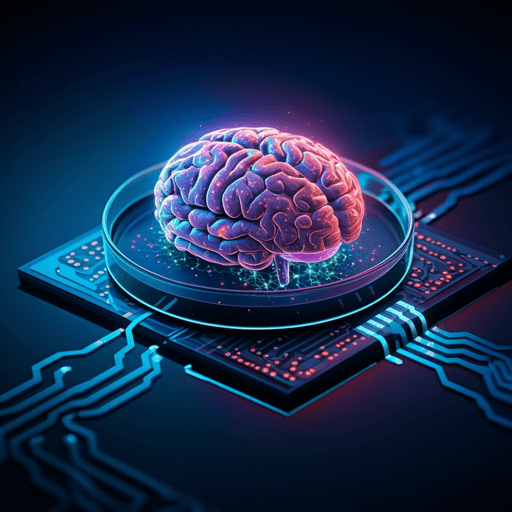
Researchers Lena Smirnova, Itzy E. Morales Pantoja, and Thomas Hartung propose merging cutting-edge AI with human stem-cell–derived brain microphysiological systems to create 'organoid intelligence' — lab-grown cognitive models that could reveal how cognition and long-term memory emerge, improve neurotoxicity testing, and explore biological computing while highlighting ethical dilemmas.... show more
Abstract
Understanding brain function remains challenging as work with human and animal models is complicated by compensatory mechanisms, while in vitro models have been too simple until now. With the advent of human stem cells and the bioengineering of brain microphysiological systems (MPS), understanding how both cognition and long-term memory arise is now coming into reach. We suggest combining cutting-edge AI with MPS research to spearhead organoid intelligence (OI) as synthetic biological intelligence. The vision is to realize cognitive functions in brain MPS and scale them to achieve relevant short- and long-term memory capabilities and basic information processing as the ultimate functional experimental models for neurodevelopment and neurological function and as cell-based assays for drug and chemical testing. By advancing the frontiers of biological computing, we aim to (a) create models of intelligence-in-a-dish to study the basis of human cognitive functions, (b) provide models to advance the search for toxicants contributing to neurological diseases and identify remedies for neurological maladies, and (c) achieve relevant biological computational capacities to complement traditional computing. Increased understanding of brain functionality, in some respects still superior to today's supercomputers, may allow to imitate this in neuromorphic computer architectures or might even open up biological computing to complement silicon computers. At the same time, this raises ethical questions such as where sentience and consciousness start and what the relationship between a stem cell donor and the respective OI system is. Such ethical discussions will be critical for the socially acceptable advance of brain organoid models of cognition.
Publisher
ALTEX
Published On
Authors
Lena Smirnova, Itzy E. Morales Pantoja, Thomas Hartung
Tags
organoid intelligencebrain microphysiological systemshuman stem cellscognition and memorybiological computingneurotoxicity testingethical implications
Listen, Learn & Level Up
Over 10,000 hours of research content in 25+ fields, available in 22+ languages.
No more digging through PDFs, just hit play and absorb the world's latest research in your language, on your time.
listen to research audio papers with researchbunny