logo
ResearchBunny Logo
Individual training prescribed by heart rate variability, heart rate and well-being scores in experienced cyclists

Health and Fitness

Individual training prescribed by heart rate variability, heart rate and well-being scores in experienced cyclists

C. Alfonso, D. C. Clarke, et al.

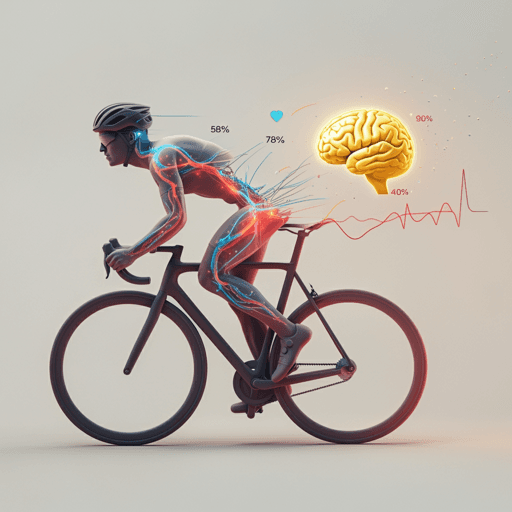
Combining vagally-mediated heart rate variability (vmHRV), resting heart rate (RHR), and subjective well-being (WB) improved cycling performance more than vmHRV alone. In a 40-day study with 28 experienced male cyclists, 1-, 5-, 20-min, and FTP efforts improved, with the vmHRV+WB+RHR group showing the largest gains—research conducted by Carla Alfonso, David C. Clarke, and Lluis Capdevila.

00:00
00:00
~3 min • Beginner • English
Abstract
Optimizing the training of endurance athletes involves the nuanced balance between overload and recovery. Monitoring recovery effectively requires integrating multiple variables. This study evaluates the efficacy of training protocols guided by vagally-mediated heart rate variability (vmHRV), resting heart rate (RHR), and subjective well-being (WB) scores in improving cycling performance. It also explores the relationships between physiological and subjective measures. Twenty-eight experienced male cyclists were divided into three groups: vmHRV-only (Group 1), vmHRV+WB (Group 2), and vmHRV +WB+RHR (Group 3). Over 40 days, participants recorded daily vmHRV, RHR, and WB scores and followed customised training protocols. Pre- and post-intervention cycling tests assessed maximal power (Pmax), 1-min, 5-min, 20-min, and functional threshold power (FTP™). Daily data analysis included correlation and autocorrelation function (ACF) assessments to evaluate trends and individual variability. Across all groups, significant performance improvements were observed for 1-min, 5-min, 20-min, FTP™, and FTP™/kg. Group 3 showed the greatest improvements, particularly in 5-min and 20-min efforts (310.5 ± 60 to 337.9 ± 71 watts, and 260.9 ± 55 to 284.5 ± 64 watts, respectively). ACF revealed stress as having the highest day-to-day consistency among subjective measures. Individual correlations revealed diverse strengths of the relationships between physiological and subjective markers. Combining vmHRV, RHR, and WB offers a more nuanced assessment of athlete readiness and enhances training outcomes compared to vmHRV-only guidance. The study underscores the value of integrating physiological and subjective measures for personalising training protocols and highlights future directions for improving monitoring systems with advanced analytics.
Publisher
Scientific Reports
Published On
Sep 30, 2025
Authors
Carla Alfonso, David C. Clarke, Lluis Capdevila
Tags
vmHRV
Resting heart rate (RHR)
Subjective well-being (WB)
Cycling performance
Functional Threshold Power (FTP)
Training personalization
Autocorrelation / stress consistency
Listen, Learn & Level Up
Over 10,000 hours of research content in 25+ fields, available in 12+ languages.
No more digging through PDFs, just hit play and absorb the world's latest research in your language, on your time.
listen to research audio papers with researchbunny