logo
ResearchBunny Logo
Brain decoding of spontaneous thought: Predictive modeling of self-relevance and valence using personal narratives

Psychology

Brain decoding of spontaneous thought: Predictive modeling of self-relevance and valence using personal narratives

H. J. Kim, B. K. Lux, et al.
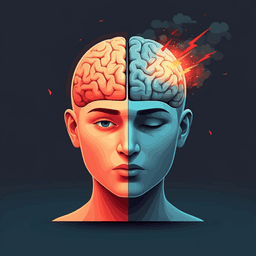
Can we read spontaneous thoughts? In this study, Hong Ji Kim, Byeol Kim Lux, Eunjin Lee, Emily S. Finn, and Choong-Wan Woo decoded two content dimensions of spontaneous thought—self-relevance and valence—directly from fMRI. Using individually generated personal stories (training n=49; tests total n=199), activity in default mode, ventral attention, and frontoparietal networks—plus anterior insula/midcingulate (self-relevance) and left TPJ/dorsomedial PFC (valence)—predicted internal thoughts and emotions, highlighting the potential for brain decoding of spontaneous thought.

00:00
00:00
~3 min • Beginner • English
Introduction
The study addresses the challenge of assessing spontaneous thoughts, which are unconstrained, self-referential, and emotionally salient. Traditional introspective reports can alter thought content (Heisenberg effect), motivating brain-based measurement. The authors focus on decoding two central content dimensions of spontaneous thought—self-relevance and valence—because prior dimensionality reduction work indicates these summarize key aspects of spontaneous cognition and relate to survival-relevant valuation and salience processes. They hypothesize that personalized narratives will evoke brain states resembling spontaneous thought and that multivariate fMRI patterns can predict trial-by-trial levels of self-relevance and valence, enabling decoding during free thinking and resting state.
Literature Review
Prior work shows that spontaneous thoughts often center on personally significant topics, including autobiographical concerns, memories, and future plans, and are linked to cognitive and affective traits and psychiatric conditions. Narratives share structural and semantic features with spontaneous thought and have been widely used to study semantic and naturalistic processing in fMRI. Self-referential processing engages distinct brain systems (e.g., medial prefrontal cortex) from non-self processing. The default mode network (DMN) supports stimulus-independent, task-unrelated thought and the level of experiential detail; limbic and ventral attention/salience networks contribute to valuation and context-dependent salience. A prior study classified the valence of task-free thoughts using medial orbitofrontal patterns derived from task-induced affect. The current work extends this literature by building whole-brain regression models to predict continuous levels of self-relevance and valence, using personalized narratives to better match spontaneous thought content.
Methodology
Participants: Fifty-seven right-handed Korean participants were recruited; 49 (mean age 22.8 ± 2.4 years; 21 female) were included after excluding 8 for poor task performance or image quality. Design: Two-day protocol separated by about one week (mean 7.3 days). Day 1: online one-on-one interview to generate personal stories; participants also read common stories to increase familiarity. Day 2: fMRI session with five story-reading runs (~14 min each) and two thought-sampling runs (~6 min each), followed by a post-scan survey. Tasks: Story-reading: Each participant read 4 personal stories (created from their interview) and 6 common stories (shared across participants). Words were presented sequentially (0.6–1.2 s per word). Intermittent in-scanner valence ratings were collected three times per story. Thought-sampling: Participants rested and freely thought; approximately every 50.7 ± 5.6 s they verbally reported their current thought with a few words (5 s response window). Post-scan survey: Participants continuously rated each story for self-relevance (0–1) and valence (−1 to 1) and rated each thought-sampling word/phrase on multiple dimensions (including self-relevance, valence, time, safety–threat, vividness). In-scanner valence ratings correlated highly with post-scan valence ratings (mean r = 0.844; z = 51.71; P < 2.220e−16, bootstrap). MRI acquisition: 3T Siemens Prisma with 64-channel head coil; T1: TR 2,400 ms, TE 2.34 ms. EPI: TR 460 ms, TE 27.2 ms, multiband 8, FoV 220 mm, 82×82 matrix, voxel size 2.7 mm isotropic, 56 interleaved slices. Volumes: 812 (thought-sampling runs), 1,855 (story runs). Preprocessing and modeling: For predictive modeling, data from story-reading were concatenated and quantized by quintiles of self-relevance and valence to create 25 averaged images per participant (5×5 grid). Principal component regression (PCR) models were trained separately for self-relevance and valence with leave-one-subject-out cross-validation (LOSO-CV) and random-split CV (RS-CV). Performance assessed via prediction–outcome correlation (r) and mean squared error; significance via bootstrap (10,000 iterations) and permutation (1,000 iterations). Model interpretation employed virtual isolation and virtual lesion analyses at the network, ROI, and searchlight levels to assess feature importance. Univariate GLMs were run for comparison. Validation analyses: 1) Classification of personal vs. common stories using the self-relevance model. 2) TR-by-TR word-level analysis comparing adjusted selection frequency based on valence (aFv) from ratings vs. model responses. 3) Application to independent data: decoding self-relevance and valence during thought-sampling (moving time-window around report onset; Gaussian smoothing FWHM 10 TRs) and two independent resting-state datasets (n = 90; n = 60), focusing on end-of-run windows aligned with post-run reports. Comparisons were made against nine a priori maps (two self-generated thought component maps; six meta-analytic maps: aversion, emotion, default, episodic, self, semantic; and PINES).
Key Findings
- Model performance during story-reading (n = 49): • Self-relevance model LOSO-CV: mean r = 0.322 (z = 9.204; P < 2.220e−16), mse = 0.148; RS-CV: mean r = 0.332, mse = 0.144. • Valence model LOSO-CV: mean r = 0.205 (z = 6.235; P = 4.511e−10), mse = 0.454; RS-CV: mean r = 0.179, mse = 0.458. • Permutation tests (1,000 iterations, LOSO-CV) significant for both models (P = 0.0010). • Model performance (valence) correlated with vividness across subjects, r = 0.370, P = 0.0090. - Self vs. common stories: • Self-relevance ratings higher for personal (0.75 ± 0.16) than common (0.42 ± 0.10), t48 = 15.86, P < 2.220e−16. • Cross-validated self-relevance model responses higher for personal vs. common, t48 = 10.18, P < 2.220e−16. • Forced-choice classification accuracy (personal vs. common) = 93.8%, P = 6.980e−11. - Word-level valence representation: • Adjusted selection frequency based on valence (aFv) from ratings correlated with aFv from valence model responses: r = 0.2855, P = 1.110e−16. - Network/region importance (virtual isolation/lesion analyses): • Default mode, ventral attention, and frontoparietal networks predicted both dimensions; mPFC predictive for both when tested separately. • Visual network predictive for self-relevance; limbic network predictive for valence. • Searchlight isolation: aMCC, aINS, visual areas for self-relevance; dmPFC, TPJ, temporal pole, STG/IFG for valence; conjunction highlighted SMA, STG, IFG. - Decoding during thought-sampling (free-thinking, n = 49): • Peak performance around the report onset (time-of-interest, 10 TR window). Binwise correlations significant but small at time-of-interest: self-relevance model predicting self-relevance ratings mean r = 0.0518, P = 0.0141 (one-tailed); valence model predicting valence ratings mean r = 0.0495, P = 0.0095. • Only the current study’s models (not nine a priori maps) predicted self-relevance/valence ratings in this context. • DMN was the only large-scale network consistently predictive for both dimensions at time-of-interest. - Decoding during rest (independent dataset 1, n = 90): • Significant positive predictions near end-of-run: last 31 TRs (14.3 s) yielded r = 0.189, P = 0.037 for self-relevance; r = 0.300, P = 0.002 for valence (one-tailed). • Network importance (last 31 TRs): self-relevance—DMN significant; valence—ventral attention, limbic, and brainstem significant. - Decoding during rest (independent dataset 2, n = 60): • Predefined 31 TR window: valence r = 0.320, P = 0.0063; self-relevance not significant (r = −0.094, P = 0.2375). • Exploratory windows: last 10 TRs (4.6 s) predicted self-relevance significantly (r = 0.218, P = 0.0470). - Additional observations: • Whole-brain predictive weights for self-relevance vs. valence weakly correlated (r = 0.120), with stronger overlap in mPFC (r = 0.269); thresholded patterns showed negative weights in dmPFC and sgACC and positive in vmPFC for both models. • Univariate GLMs differed from multivariate maps but showed consistent activations (e.g., aMCC/aINS for personal > common and self-relevance modulation; vmPFC positive modulation with valence).
Discussion
The findings demonstrate that whole-brain multivariate fMRI patterns can predict continuous levels of two key affective content dimensions of spontaneous thought—self-relevance and valence—elicited by personalized narratives. The models generalized beyond narrative reading to free-thinking and resting-state contexts, addressing the core research question of brain-based decoding of spontaneous cognitive-affective states without relying on intrusive thought probes. The DMN emerged as a central substrate for both dimensions, aligning with its established role in internally oriented cognition. Distinct networks and regions contributed uniquely: aINS and aMCC (salience/ventral attention) and visual cortex were more critical for self-relevance, while the limbic network, left TPJ, and dmPFC supported valence, consistent with affective valuation and the DMN’s dorsomedial subsystem implicated in reflective, verbalized imagination. The successful decoding during rest indicates that resting-state scans contain decodable signatures of ongoing thought content, with end-of-run windows aligning with post-run reports. Comparisons with a priori signatures showed specificity of the newly developed models for these dimensions. These results suggest a feasible path toward individualized assessment of spontaneous thought content from neuroimaging, with implications for understanding variability in affective cognition and for potential clinical applications where task-based assessments are impractical.
Conclusion
This work introduces fMRI-based predictive models that decode self-relevance and valence from brain activity using personalized narratives as naturalistic stimuli. The models identify shared (DMN, mPFC) and distinct (aINS/aMCC/visual for self-relevance; limbic, left TPJ, dmPFC for valence) neural contributors and generalize to free-thinking and rest across multiple datasets. Contributions include: (1) a narrative-driven approach to approximating spontaneous thought, (2) interpretable whole-brain decoders for core affective content dimensions, and (3) proof-of-concept decoding during rest without explicit tasks. Future directions include improving prediction with personalized and connectivity-based models, expanding to clinical populations, disentangling interdependencies between self-relevance and valence, and developing minimally task-intrusive paradigms to capture rich spontaneous cognition.
Limitations
- Stimulus type differences: Personal and common stories may differ qualitatively (e.g., higher concentration and familiarity for personal stories: concentration 0.78 ± 0.17 vs. 0.69 ± 0.21; familiarity 0.87 ± 0.16 vs. 0.74 ± 0.19), potentially confounding self-relevance with attention or familiarity despite mitigation steps (pre-reading, quizzes, ratings). Using a single story type with parametrically varied self-relevance/valence could reduce this confound. - Modest predictive effect sizes: Decoding during free-thinking and rest yielded small r values and would not survive multiple-comparison correction in some analyses, warranting cautious interpretation and raising the possibility of type I errors. Replication of valence predictions across datasets supports generalizability, but larger samples and stronger models are needed. - Interdependence of dimensions: Self-relevance and valence were positively correlated in raw ratings (r = 0.111), and model weight patterns showed weak spatial correlations, suggesting partial overlap (e.g., self-positivity bias). Further work should more cleanly orthogonalize or model their interrelationship. - Modeling choices: Only activation-based whole-brain PCR models were tested. Functional connectivity-based or hybrid activation–connectivity models may improve performance in naturalistic contexts. Additionally, idiosyncratic representations suggest benefits of personalized modeling (e.g., dense-sampling small-N designs).
Listen, Learn & Level Up
Over 10,000 hours of research content in 25+ fields, available in 12+ languages.
No more digging through PDFs, just hit play and absorb the world's latest research in your language, on your time.
listen to research audio papers with researchbunny