

PsychologyPNAS
Brain decoding of spontaneous thought: Predictive modeling of self-relevance and valence using personal narratives
H. J. Kim, B. K. Lux, et al.
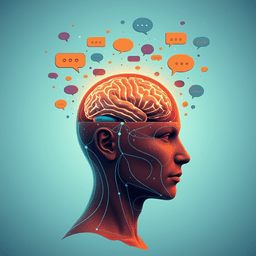
Can we read spontaneous thoughts? In this study, Hong Ji Kim, Byeol Kim Lux, Eunjin Lee, Emily S. Finn, and Choong-Wan Woo decoded two content dimensions of spontaneous thought—self-relevance and valence—directly from fMRI. Using individually generated personal stories (training n=49; tests total n=199), activity in default mode, ventral attention, and frontoparietal networks—plus anterior insula/midcingulate (self-relevance) and left TPJ/dorsomedial PFC (valence)—predicted internal thoughts and emotions, highlighting the potential for brain decoding of spontaneous thought.
Related Publications
Explore these studies to deepen your understanding
Adjacent work that informs or extends this paper's methodology and findings.
Psychology
Brain decoding of spontaneous thought: Predictive modeling of self-relevance and valence using personal narratives
H. J. Kim, B. K. Lux, et al.

Psychology
Prolonged exertion of self-control causes increased sleep-like frontal brain activity and changes in aggressivity and punishment
E. Ordali, P. Marcos-prieto, et al.
Psychology
Prolonged exertion of self-control causes increased sleep-like frontal brain activity and changes in aggressivity and punishment
E. Ordali, P. Marcos-prieto, et al.

Psychology
Predictive modeling of religiosity, prosociality, and moralizing in 295,000 individuals from European and non-European populations
P. O. Jacquet, F. Pazhoohi, et al.


