
Interdisciplinary StudiesPNAS
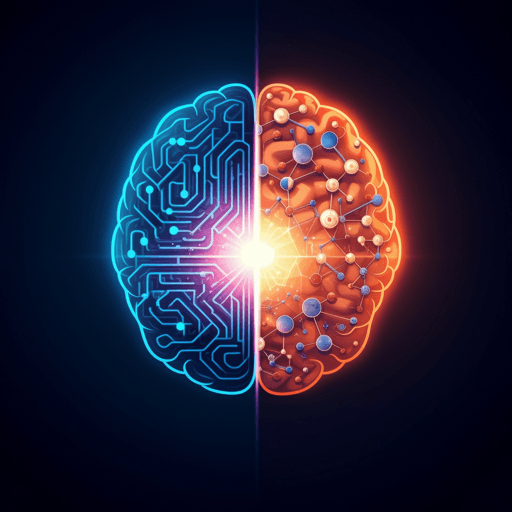
A unified neural representation model for spatial and conceptual computations
T. Haga, Y. Oseki, et al.
The hippocampus and entorhinal cortex encode spaces via place and grid cells and also represent semantic concepts. This study reveals a mathematical link between a spatial navigation value function and an information measure for word embeddings, and introduces “disentangled successor information” (DSI), which produces place/grid-like spatial representations and concept-like word representations and enables common arithmetic-based inferences across spaces and words. Research conducted by Tatsuya Haga, Yohei Oseki, and Tomoki Fukai.
Related Publications
Explore these studies to deepen your understanding
Adjacent work that informs or extends this paper's methodology and findings.
Medicine and Health
Design and Analysis of a Deep Learning Ensemble Framework Model for the Detection of COVID-19 and Pneumonia Using Large-Scale CT Scan and X-ray Image Datasets
X. Xue, S. Chinnaperumal, et al.

Political Science
Social networks, disinformation and diplomacy: a dynamic model for a current problem
A. G. Rincón, S. B. Moreno, et al.
![A Novel Multivariable Prediction Model for Predicting [Outcome] Using a Neural Network Approach](/_next/image?url=https%3A%2F%2Fd11tyujt19m6rg.cloudfront.net%2Fthumbnails%2Fmedium%2F27c7eae431fa96717f6a3b10f56be139e03161fedb114e775751c4a5c0df05bb9d.jpg&w=256&q=75)
Medicine and Health
A Novel Multivariable Prediction Model for Predicting [Outcome] Using a Neural Network Approach
A. 1. Name, A. 2. Name, et al.

Engineering and Technology
Flow virometry for water-quality assessment: protocol optimization for a model virus and automation of data analysis
H. R. Safford, M. M. Johnson, et al.


