logo
Loading...
Suspected triple co-infection with SARS-CoV-2, Legionella pneumophila, and Streptococcus pneumoniae after hot-spring travel: a case report
Medicine and HealthExploration of Medicine

Suspected triple co-infection with SARS-CoV-2, Legionella pneumophila, and Streptococcus pneumoniae after hot-spring travel: a case report

R. Hirose, H. Takahashi, et al.

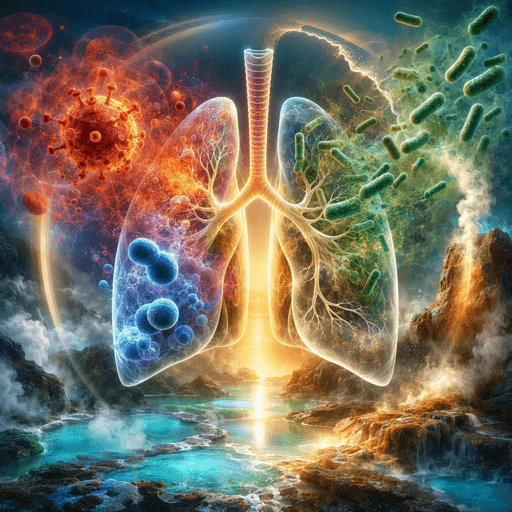
After hot-spring travel, a post-splenectomy patient presented with findings pointing to a rare suspected triple co-infection involving SARS-CoV-2, Legionella pneumophila, and Streptococcus pneumoniae. Research conducted by Ryutaro Hirose, Hidenori Takahashi, Takumi Yasuda, Kota Taguchi, Kanako Furukawa, Yugo Satake, Hiroki Nagamatsu, Naoya Toba, Mio Toyama-Kousaka, Shinichiro Ota, Miwa Morikawa, and Masaharu Shinkai highlights how microbiological testing, atypical imaging, and host risk factors can reveal pathogens hidden behind COVID-19 pneumonia—and guide successful targeted treatment.... show more
Abstract
Bacterial co-infection in patients with coronavirus disease 2019 (COVID-19) can complicate diagnosis because of overlapping clinicoradiologic findings among pathogens. The authors report suspected triple co-infection with severe acute respiratory syndrome coronavirus 2 (SARS-CoV-2), Legionella pneumophila, and Streptococcus pneumoniae following hot-spring travel in a post-splenectomy patient. A man in his 70s with previous subtotal esophagectomy and concomitant splenectomy for esophageal cancer was admitted with fever, worsening productive cough, and altered sensorium. He had recently traveled to a hot spring with a group that included his wife, who also developed fever and was diagnosed with COVID-19. On admission, urinary antigen tests for L. pneumophila and S. pneumoniae and a SARS-CoV-2 nucleic acid amplification test were positive, while sputum culture yielded S. pneumoniae. Chest computed tomography showed multifocal bilateral ground-glass opacities, small bilateral pleural effusions, and relatively well-defined right middle-lobe consolidation with air bronchograms in a peribronchovascular distribution. Together, the microbiological and radiological findings supported suspected triple co-infection rather than COVID-19 alone. Treatment with remdesivir, ceftriaxone, and levofloxacin produced improved oxygenation and reduced inflammatory markers. Remdesivir and ceftriaxone were stopped after 5 days, while levofloxacin was continued for 14 days. Follow-up imaging showed marked improvement, and the patient was discharged. Public health investigations found neither Legionella at the hot-spring facility nor additional linked cases. The case emphasizes prompt pathogen-directed evaluation when COVID-19 pneumonia occurs with relevant exposure, host risk factors, and atypical imaging findings.
Publisher
Exploration of Medicine
Published On
Aug 17, 2026
Authors
Ryutaro Hirose, Hidenori Takahashi, Takumi Yasuda, Kota Taguchi, Kanako Furukawa, Yugo Satake, Hiroki Nagamatsu, Naoya Toba, Mio Toyama-Kousaka, Shinichiro Ota, Miwa Morikawa, Masaharu Shinkai
Tags
COVID-19bacterial co-infectionLegionella pneumophilaStreptococcus pneumoniaepost-splenectomyhot-spring exposurepathogen-directed evaluation
Listen, Learn & Level Up
Over 10,000 hours of research content in 25+ fields, available in 22+ languages.
No more digging through PDFs, just hit play and absorb the world's latest research in your language, on your time.
listen to research audio papers with researchbunny