
logo
Loading...
Stereotactic Body Radiotherapy for Renal Cell Carcinoma—A Review of Use in the Primary, Cytoreductive and Oligometastatic Settings
Medicine and HealthCancers

Stereotactic Body Radiotherapy for Renal Cell Carcinoma—A Review of Use in the Primary, Cytoreductive and Oligometastatic Settings

C. J. Q. Villafuerte and A. Swaminath

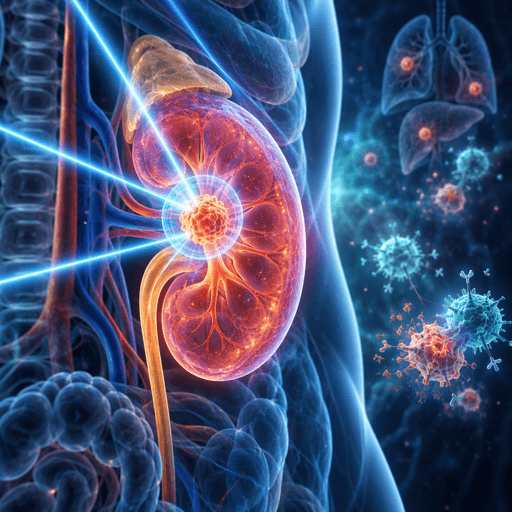
Can precision radiation expand treatment options for kidney cancer? Research conducted by Conrad Josef Q. Villafuerte and Anand Swaminath examines stereotactic body radiotherapy (SBRT) for renal cell carcinoma. Phase II trials and meta-analyses show strong local tumor control and low severe late toxicity in localized disease, alongside good control and minimal toxicity in oligometastatic disease. SBRT may also delay starting or switching systemic treatments. Listen to explore its growing role in treatment guidelines—and why its potential to reduce tumor burden and enhance immune responses still awaits trial results.... show more
Abstract
Renal cell carcinoma (RCC) has been increasing in incidence by around 1.5% per year for several years. However, the mortality rate has been decreasing by 1.6% per year, and this can be attributed to stage migration and improvements in treatment. One treatment modality that has emerged in recent years is stereotactic body radiotherapy (SBRT), which is an advanced radiotherapy technique that allows the delivery of high-dose radiation to the tumor while minimizing doses to the organs at risk. SBRT has developed a role in the treatment of early-stage, oligometastatic and oligoprogressive RCC. In localized disease, phase II trials and meta-analyses have shown that SBRT provides a very high probability of long-term local control with a low risk of severe late toxicity. In oligometastatic (OMD) RCC, the same level of evidence has similarly shown good local control and minimal toxicity. SBRT could also delay the necessity to start or switch systemic treatments. Medical societies have started to incorporate SBRT in their guidelines in the treatment of localized disease and OMD. A possible future role of SBRT involves cytoreduction. It is theorized that SBRT can lower tumor burden and enhance immune-related response, but it cannot be recommended until the results of the phase II trials are published.
Publisher
Cancers
Published On
Sep 29, 2024
Authors
Conrad Josef Q. Villafuerte, Anand Swaminath
Tags
Renal cell carcinomaStereotactic body radiotherapyLocal tumor controlOligometastatic diseaseOligoprogressive diseaseSystemic treatment delayCytoreduction
Listen, Learn & Level Up
Over 10,000 hours of research content in 25+ fields, available in 22+ languages.
No more digging through PDFs, just hit play and absorb the world's latest research in your language, on your time.
listen to research audio papers with researchbunny