logo
ResearchBunny Logo
Sleep deprivation-induced memory impairment: exploring potential interventions

Medicine and Health

Sleep deprivation-induced memory impairment: exploring potential interventions

Y. Fan, J. Li, et al.

Sleep's central role in memory consolidation and the damaging effects of sleep deprivation are synthesized in this review, which examines neurobiological mechanisms and potential countermeasures—from drugs like donepezil, memantine, and tolcapone to neuromodulation (TMS, DBS, tDCS) and the emerging gut–brain axis. Research conducted by Yisheng Fan, Jianfeng Li, and Shanfeng Qiao.... show more
Introduction

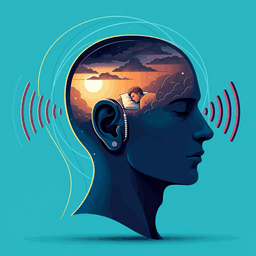
The role of sleep in memory consolidation is clear despite incomplete understanding of sleep’s broader functions. Both total and partial sleep deprivation impair performance on memory tasks and reduce the ability to form new memories. Neuroimaging shows that sleep deprivation after learning disrupts long-term restructuring of memories in the brain. This perspective reviews evidence of memory impairments induced by sleep deprivation and explores potential interventions, including a novel focus on the gut-brain axis, to mitigate these effects.

Literature Review

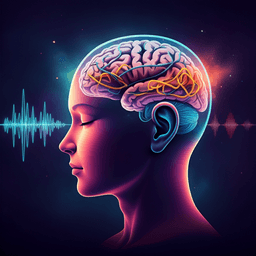
Historical and mechanistic work shows sleep benefits memory consolidation, dating back to 1920s studies where sleep after learning improved recall of syllables. The active systems consolidation framework posits that experiences encoded across brain regions are integrated by the hippocampus and then reactivated during sleep to strengthen neocortical representations via synaptic consolidation, supporting long-term storage. Neuronal replay is most prominent in slow-wave sleep (SWS) and contributes to redistribution of hippocampus-dependent memories to neocortex; indirect human evidence comes from fMRI/EEG and intracranial recordings. Specific sleep oscillations—neocortical slow oscillations (<1 Hz), thalamo-cortical spindles, and hippocampal sharp-wave ripples—coordinate to reactivate hippocampal memories and facilitate transfer to neocortex. REM sleep may support synaptic consolidation via increased plasticity-related gene activity alongside cholinergic and theta activity. Lifestyle research links healthier habits (diet, exercise, weight management) to better sleep quality and lower insomnia/OSA rates, while meta-analytic evidence suggests longer daytime naps (≥30 minutes) associate with adverse health outcomes, underscoring nuanced effects of napping. Empirical studies consistently show that sleep deprivation impairs declarative memory performance and reduces capacity to encode new memories compared with well-rested controls.

Methodology
Key Findings

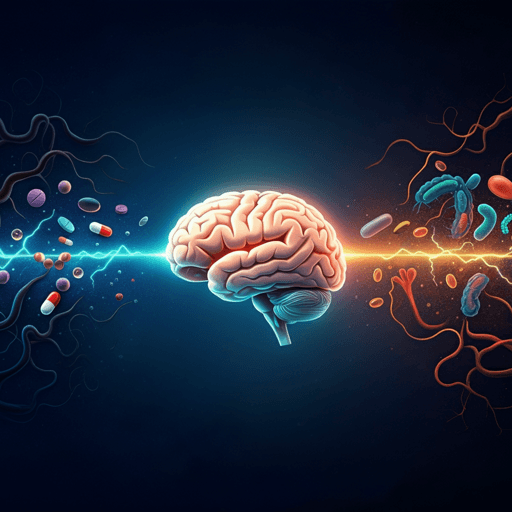
• Sleep deprivation impairs both consolidation of recently encoded information and the encoding of new memories, with neuroimaging and electrophysiology implicating disrupted hippocampo-neocortical communication and replay during SWS. • Sleep-stage dynamics are central: slow oscillations orchestrate spindle and ripple activity to prime cortical networks and reactivate hippocampal traces; disruptions undermine long-term storage. • Lifestyle factors correlate with sleep health: healthier lifestyle patterns associate with better sleep quality and lower insomnia/OSA prevalence; habitual long naps (≥30 min) are linked to increased cardiovascular and metabolic risks, whereas shorter naps show no significant risk signal. • Pharmacological interventions show promise: donepezil improves episodic memory in young individuals vulnerable to sleep deprivation and prevents spatial memory deficits in sleep-deprived non-human primates; memantine similarly prevents sleep-deprivation-induced spatial memory deficits; tolcapone’s efficacy against lapses after sleep deprivation depends on COMT genotype, indicating personalized responsiveness. • Gut-brain axis: sleep deprivation disturbs intestinal microflora and barrier function; fecal microbiota transfer from insomnia-affected donors induces cognitive impairments in healthy mice, indicating a causal link; melatonin ameliorates sleep-deprivation-induced cognitive impairments by modulating gut microbiota and their metabolites, which reduce inflammation and neuronal apoptosis in the hippocampus. • Physical therapies: 1 Hz rTMS ameliorates spatial learning and memory deficits in sleep-deprived rats by enhancing hippocampal synaptic structure/quantity; tDCS improves cognitive performance during acute sleep deprivation without adversely affecting recovery sleep or post-recovery cognition. Overall, converging evidence supports multi-modal countermeasures—pharmacological, neuromodulatory, microbiome-targeted, and lifestyle—to mitigate sleep deprivation-induced memory impairment.

Discussion

Findings across mechanistic, behavioral, and translational studies converge on sleep’s indispensable role in memory processes and identify multiple intervention targets. Disruptions to SWS-coordinated slow oscillations, spindles, and hippocampal ripples explain deficits in consolidation and subsequent encoding capacity. Pharmacological agents that modulate cholinergic and glutamatergic systems (donepezil, memantine) can partially restore performance following sleep loss, while COMT-sensitive catecholaminergic modulation (tolcapone) highlights the need for personalized approaches. Non-invasive and invasive neuromodulation (rTMS, tDCS) can enhance hippocampal synaptic integrity and support cognition under acute deprivation. The gut-brain axis introduces a systemic dimension: sleep loss-induced dysbiosis can drive inflammation and hippocampal apoptosis, and melatonin’s microbiota-mediated effects suggest microbiome-targeted therapies may reduce cognitive sequelae of sleep loss. Together, these insights support a multifaceted, integrative strategy combining lifestyle optimization with targeted biological and neuromodulatory interventions to address sleep deprivation-induced memory impairment.

Conclusion

Sleep deprivation produces robust memory impairments through complex, multi-level mechanisms. Evidence supports chemical interventions (donepezil, memantine), genotype-contingent catecholaminergic modulation (tolcapone), microbiome-targeted strategies via the gut-brain axis (including melatonin-mediated pathways), and physical therapies (rTMS, tDCS) as potential countermeasures. These approaches should complement lifestyle changes that promote healthy sleep patterns. Continued research into the interplay among sleep architecture, gut microbiome, and memory will enable more holistic, effective treatments and preventive strategies.

Limitations
Listen, Learn & Level Up
Over 10,000 hours of research content in 25+ fields, available in 12+ languages.
No more digging through PDFs, just hit play and absorb the world's latest research in your language, on your time.
listen to research audio papers with researchbunny