Health and Fitness
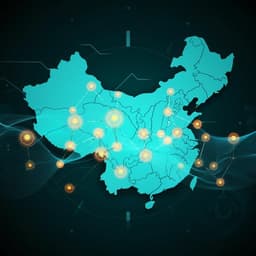
Mapping ticks and tick-borne pathogens in China
G. Zhao, Y. Wang, et al.
Ticks are globally distributed hematophagous arthropods that transmit diverse pathogens (viruses, rickettsiae, spirochetes, protozoa, helminths), posing major public and veterinary health risks second only to mosquitoes. Recent climatic and environmental changes are driving tick range expansions, exemplified by Haemaphysalis longicornis spreading beyond East Asia and rising tick-borne encephalitis associated with Ixodes ricinus and I. persulcatus expansion. In China, awareness of emerging tick-borne pathogens has increased, but high-resolution spatial distributions and ecological niches of ticks and pathogens have not been systematically characterized. This study aims to compile comprehensive, county-level distributions of major tick species, tick-borne agents, and human infections in China (1950–2018), and to quantify ecoclimatic and socioenvironmental determinants of their distributions using predictive modeling to inform surveillance and control.
Previous efforts in China include: (1) a county-level dataset of tick distribution and diversity from literature (1960–2017), (2) province-level reviews of geographic distribution and host diversity of ticks, and (3) reviews of associations between pathogenic microorganisms and tick vectors up to 2014. However, these works lacked high-resolution spatial mapping of tick-borne pathogens and systematic analyses of ecological niches for major ticks and prevalent pathogens. The current study fills these gaps by integrating extensive literature and field data, mapping both vectors and pathogens at county-level resolution, and modeling ecological drivers.
Data assembly: A comprehensive database was compiled from (1) peer-reviewed literature (1950–2018) on occurrences of 124 tick species and 103 tick-associated agents in China (five databases searched; dual independent review; standardized data extraction; de-duplication to one record per county-period), (2) historical tick presence records (pre-1990) from the Medical Entomology Gallery and unpublished survey data (1990–2018) from the authors’ institute, and (3) newly conducted nationwide field surveys. Laboratory methods for pathogen detection included RT-PCR, PCR, isolation/culture, and smear microscopy. Ambiguous reports were clarified with authors or excluded. Records were georeferenced at county level when possible (78.8% for tick species; 63.3% for pathogens; 100% for SFTSV/TBEV; 60.6% for human TBD cases). One county-level database was created for analyses. Predictor data: Forty-five county-level socioenvironmental and ecoclimatic variables were compiled. Climatic data (1981–2018) from 2006 meteorological stations were aggregated into 19 bioclimatic variables (BIO01–BIO19). For counties without stations, means of the five nearest stations were used. Land cover rasters (1 km resolution) were from 2005 (for tick species models) and 2015 (for SFTSV/TBEV models). Elevation was from SRTM. Demography included rural population proportion and density (2010 census). Variable selection emphasized ecological relevance and cross-species comparability. Spatial mapping: Occurrences of ticks, pathogens, and human cases were mapped in ArcGIS 10.0 at county/prefecture/province centroids per data availability. Ecological modeling of ticks: For each of 19 predominant tick species (detected in >40 counties), a case-control design was used. Counties with presence records were cases; surveyed counties with no detection were controls; unsurveyed or inconclusive counties were excluded from model fitting but included for projection. Boosted Regression Trees (BRT) models with 43 predictors (24 environmental, 19 bioclimatic) were trained. To mitigate sampling bias, a logistic regression model estimated survey selection probability, incorporated to counterbalance potential bias. Models projected probabilities to all counties to map ecological suitability. Pathogen risk modeling (SFTSV and TBEV): BRT models with the same 45 predictors were fitted. Case counties were those with pathogen detected in ticks and/or with reported human cases. Control counties had stringent criteria: no human cases or pathogen detection; primary vector (Ha. longicornis for SFTSV; I. persulcatus for TBEV) surveyed but absent, or unsurveyed with predicted vector probability below the optimal cutoff (Youden’s index). A two-stage bootstrap generated 100 models per pathogen; average relative contributions and predicted probabilities were mapped. Model performance was evaluated by AUC and partial AUC (tolerance 0.2).
- Data coverage: 7344 unique records across 1134 counties (39% of mainland China), encompassing 124 tick species (113 hard ticks in 7 genera; 11 soft ticks in 2 genera) and 103 tick-associated agents.
- Tick distributions: Most widespread genera: Dermacentor (574 counties), Haemaphysalis (570), Ixodes (432), Rhipicephalus (431), Hyalomma (298), Argas (90), Ornithodoros (38), Amblyomma (37), Anomalohimalaya (5). Species in >200 counties: Dermacentor nuttalli, Haemaphysalis longicornis, D. silvarum, Hyalomma scupense, Rhipicephalus sanguineus. In 100–200 counties: R. microplus, Ixodes persulcatus, I. sinensis, I. granulatus, Hy. asiaticum. Nineteen predominant species (>40 counties) were identified; their habitats are mainly forests and meadowlands (median 46.4% of habitats).
- Biogeographic patterns: Highest tick species richness in Central China (61 species), South China (57), and Inner Mongolia–Xinjiang (50). Xinjiang had multiple prefectures with ≥20 species.
- Model performance and drivers (19 ticks): Testing AUCs 0.83–0.97; testing partial AUC ratios 1.30–1.78. Key predictors varied by species; temperature seasonality and mean temperature in the driest quarter contributed ≥5% for 14 and 12 species, respectively; elevation contributed ≥5% for seven species. Predictor effects could be opposite across species (e.g., higher driest-quarter temperature increased presence for I. granulatus and R. haemaphysaloides but decreased for I. persulcatus and Ha. longicornis).
- Under-detection: Model-predicted high-risk extents exceeded observations by 31–520% in county counts, 14–476% in area, and 25–556% in population. Selected species: Ha. longicornis predicted to affect 1140 counties and 588.0 million people (area 1.728 million km²), I. sinensis 630 counties and 363.3 million; R. microplus 678 counties and 349.6 million. R. sanguineus and R. haemaphysaloides each affected >200 million people. Largest areas affected: D. nuttalli, I. crenulatus, Hy. asiaticum, Argas persicus, D. daghestanicus (2.0–3.8 million km²).
- Ecological clustering: Five clusters of the 19 ticks exhibited distinct environmental niches and spatial aggregations (e.g., Cluster I: D. nuttalli/D. silvarum in northern China with strong temperature seasonality; Cluster II: Ha. longicornis/Hy. scupense/R. sanguineus in shrub grasslands and croplands at low–mid elevations; Cluster III: southern low-elevation woodlands; Cluster IV: northeastern/northwestern forests; Cluster V: meadow and desert grasslands of IMX/QT).
- Pathogen diversity: 103 tick-borne agents recorded; 65 newly identified in the past two decades. Ha. longicornis harbored the most agents (44; including 7 Rickettsia, 7 Babesia, 12 Anaplasmataceae, 4 Theileria, 4 Borrelia, 9 viruses, and Francisella tularensis). Other high-diversity vectors: I. persulcatus (36), D. nutalli (32), R. microplus (31), D. silvarum (30), Ha. concinna (24), Hy. asiaticum (23). Agents parasitizing many tick species included A. phagocytophilum (22), B. burgdorferi s.s. (20), B. garinii (18), E. chaffeensis (16), R. raoultii (15), C. burnetii (14), B. afzelii (11), T. annulata (11), Jingmen tick virus (12).
- Human infections (to 2018): Borrelia (n=2786), Anaplasmataceae (n=415), Babesia spp. (n=215), spotted fever group rickettsiae (n=129); plus other bacteria (n=216; 120 F. tularensis, 95 C. burnetii, 1 Colpodella). Nineteen tick-borne viruses identified, six with human infections; SFTSV and TBEV imposed the greatest burden. Hundreds of CCHFV cases in Xinjiang and few in Yunnan; 12 Jingmen tick virus cases in Heilongjiang; Alongshan virus detected in ticks and humans in Inner Mongolia/Heilongjiang.
- SFTSV risk: Human SFTS cases concentrated in Liaoning, Shandong, Jiangsu, Zhejiang, Henan, Hubei, Anhui. Model-predicted high-risk (probability >0.5) areas include 251.5 million people. Top contributors (RC >7%): temperature seasonality (16.9%), mean temperature wettest quarter (10.1%), elevation (10.0%), annual temperature range (9.5%), closed woodland (9.0%), mean temperature driest quarter (7.1%), precipitation wettest month (5.8%), precipitation driest quarter (5.3). Ecological preference: low–moderate elevations (<1000 m), strong temperature seasonality, cold/dry winters, warm/wet summers.
- TBEV risk: Human cases clustered in northeastern China; NW areas with virus detected in ticks show mild–moderate risk. About 94.5 million residents live in high-risk areas. Dominant predictor: temperature seasonality (RC 54.0%); additional contributors: elevation (7.7%), closed woodland (7.2%), mean temperature coldest quarter (5.2%), mean temperature wettest quarter (27.4%). High risk associated with low–medium elevations, strong seasonality in temperature/precipitation, and low winter and summer temperatures.
This work provides the most comprehensive county-level mapping of tick vectors, tick-borne agents, and human infections in China over seven decades, and quantifies ecological niches and drivers using robust machine-learning models. The analysis reveals that observed distributions substantially under-represent ecologically suitable habitats, often by several fold, indicating extensive under-detection due to limited or uneven field sampling. Key climatic determinants—particularly temperature seasonality and winter (driest-quarter) temperatures—underscore the importance of overwintering survival in shaping tick and pathogen ecology. Grouping species by ecological niches yields five clusters that align with biogeographic zones and can guide surveillance by targeting co-suitable species in shared habitats. Public health implications are considerable: Ha. longicornis alone potentially exposes over 40% of China’s population and harbors 44 agents including SFTSV; Ixodes species collectively cover dense populations and transmit TBEV and Borrelia. Compared with previous disease-focused studies, pathogen-centric ecological models here identify broader areas and populations at risk for SFTSV and TBEV, reflecting updated data and vector-informed control definitions. The findings support prioritizing surveillance in under-sampled yet ecologically suitable regions (e.g., northern Xinjiang for SFTSV and TBEV) and in areas where Lyme disease cases occur despite low modeled Ixodes risk, given other competent ticks’ presence. Human settlement patterns and land cover also modulate risk, suggesting interactions between vector ecology and anthropogenic landscapes.
The study maps, at high spatial resolution, the distributions of 124 tick species, 103 tick-borne agents, and human cases across China and models the ecological suitability of 19 predominant ticks and two major pathogens (SFTSV, TBEV). It identifies substantial under-detection of vector distributions, highlights temperature seasonality and winter conditions as primary ecological drivers, and delineates five ecological clusters of ticks. The results call for expanded, targeted field surveillance of ticks—especially species harboring high-consequence pathogens—alongside strengthened clinical surveillance and diagnostic capacity in high- and emerging-risk areas. Future work should: (1) validate and refine models with data from neighboring endemic countries, (2) incorporate more temporally resolved land cover and urbanization metrics, (3) evaluate additional socioecological factors and host distributions, and (4) develop integrated risk forecasting that couples vector, pathogen, host, and human behavior data.
- Sampling bias: Tick survey locations were not randomly sampled; although 1134 counties cover all biogeographic zones, non-random sampling may bias model inference, potentially attenuating effects of key predictors.
- Land cover temporal mismatch: Tick species models used 2005 land cover due to data comparability, which may not reflect recent rapid landscape changes; pathogen models used 2015 land cover but still may lag ecological changes.
- Outcome uncertainty: Many surveys are cross-sectional, and absence data carry high uncertainty; high AUC values may not fully reflect model goodness-of-fit under uncertain absences.
- Geographic scope: Models were trained solely on China data; external validity to other countries remains to be assessed.
- Control definition for pathogen models: Stringent control criteria may overestimate high-risk areas from a prevention standpoint.
Related Publications
Explore these studies to deepen your understanding of the subject.