

Medicine and HealthNature Communications
Gliovascular transcriptional perturbations in Alzheimer's disease reveal molecular mechanisms of blood brain barrier dysfunction
Ö. İş, X. Wang, et al.
Discover groundbreaking insights into the molecular changes driving blood-brain-barrier dysfunction in Alzheimer's disease. This compelling research, conducted by prominent authors including Özkan İş, Xue Wang, and Elanur Yılmaz, reveals the crucial role of pericytic SMAD3 and astrocytic VEGFA interactions, validated across various models. Join us on this journey into the complexities of Alzheimer's pathology.
Related Publications
Explore these studies to deepen your understanding
Adjacent work that informs or extends this paper's methodology and findings.
Engineering and Technology
Towards Novel Biomimetic In Vitro Models of the Blood-Brain Barrier for Drug Permeability Evaluation
I. Mármol, S. Abizanda-campo, et al.

Biology
Massive Solubility Changes in Neuronal Proteins upon Simulated Traumatic Brain Injury Reveal the Role of Shockwaves in Irreversible Damage
A. A. Saei, H. Gharibi, et al.
Medicine and Health
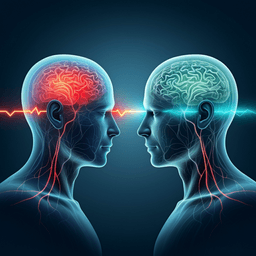
Brain-to-brain mechanisms underlying pain empathy and social modulation of pain in the patient-clinician interaction
D. Ellingsen, K. Isenburg, et al.

Medicine and Health
Influence of stress induced by the first announced state of emergency due to coronavirus disease 2019 on outpatient blood pressure management in Japan
K. Kobayashi, K. Chin, et al.


