Computer Science
Extended human agency: towards a teleological account of AI
J. Noller
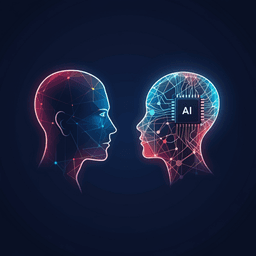
The paper addresses how artificial intelligence—specifically artificial neural networks (ANNs)—relates to and transforms the human lifeworld, with a focus on action and agency rather than solely on cognition or technical performance. It argues that shifting from a narrow concern with trustworthy AI to a conception of AI as extending human agency clarifies questions about autonomy and responsibility in everyday practices. The author identifies shortcomings in two prevailing orientations: anthropomorphizing AI by ascribing moral properties to systems, and locating responsibility exclusively with expert designers. As an alternative, the paper proposes an extended action account that centers the teleological linkage between human purposes and AI operations over socially grounded databases and algorithms. Issues such as implicit and explicit bias in datasets and algorithmic ‘filter bubbles’ illustrate how AI reshapes our practical environment. Methodologically, the author adopts a critical middle position, distinguishing the proposed view from four alternatives (simulation, instrumentalist, anthropomorphic, and indifference/singularity accounts) and situating the analysis within phenomenology (Ihde), enactivism, and the role of language in extending agency.
The paper engages a broad philosophical and AI-ethics literature to frame AI within the digital lifeworld. It draws on Husserl’s lifeworld as the precondition for purposive structures, and Floridi’s concepts of the infosphere and ‘onlife’ (and levels of abstraction) to explain how digital processes permeate everyday practices. Ihde’s typology of human–technology relations (embodiment, hermeneutic, alterity, background) is used to motivate a new ‘extension relation’ better suited to AI’s integration into life. Enactivist and extended mind perspectives (Froese & Ziemke; Clark & Chalmers) inform the shift from internal cognition to action and agency extended via language and AI. Historical debates are revisited: Turing’s imitation game as a simulation benchmark; Searle’s syntax/semantics critique and simulation versus duplication distinction; Engelbart’s augmentation of human intellect as an early systemic view of human–machine performance; and contemporary concerns about filter bubbles (Pariser) and data ethics (bias, opacity). The paper also situates itself against strong/weak AI framings (Russell & Norvig) and singularity narratives (Kurzweil), and contrasts with moralization-of-objects approaches (Verbeek) and shared responsibility or hybrid agency models (Hanson; Berber), arguing instead for a teleological process view linking databases and algorithms to human purposes.
This is a conceptual-philosophical inquiry advancing a teleological account of AI as extended human agency. The author adopts: (1) a critical middle position differentiating the proposed view from four alternatives (simulation, instrumentalist, anthropomorphic, indifference/singularity); (2) phenomenological analysis (Husserl; Ihde) to reconceive AI within the lifeworld; (3) enactivist and extended mind frameworks to shift emphasis from cognition to purposive action mediated by language; and (4) teleological level of abstraction to analyze the interrelation among human purposes/intentions, socially grounded databases, and algorithms. The approach includes normative analysis of responsible AI via the unity of empirical (social) data and conceptual (algorithmic) procedures, with illustrative examples (e.g., filter bubbles) and references to ANN training practices (including the role of fine-tuning and human-in-the-loop adjustments). No empirical data are collected; instead, the paper synthesizes philosophical arguments and AI scholarship to derive criteria for responsible integration of AI into human action.
- AI is best understood neither as a subject nor as a mere object/tool but as an ‘extension relation’ within the human lifeworld that augments and interweaves with human teleological processes (purposes, intentions, actions).
- A hybrid, teleological account links the main ANN components—socially grounded databases and algorithms—to human purposes, making AI an enactive extension of human agency rather than a separate agent.
- Responsible AI requires a unity of social data and conceptual algorithms: databases should be as objective/neutral as possible, and algorithms must be applied to realize human purposes appropriately. This framing helps mitigate bias (implicit/explicit) and opacity by situating AI outputs within humanly produced data and aims.
- The paper distinguishes its view from four alternatives: simulation (mere imitation), instrumentalist (AI as just a tool), anthropomorphic (AI as human-like), and indifference/singularity (inevitable merger), arguing each misses the teleological, lifeworld integration of AI.
- Language is central as a carrier of human intentions and concepts; ANNs trained on vast linguistic corpora (e.g., chatbots trained on hundreds of billions of tokens) extend not only cognition but also practical agency and autonomy.
- The ethical stance shifts horizontally (integration within socio-technical systems) rather than vertically (AI as superior power), emphasizing systemic interdependence and human-initiated, heteronomous AI performances.
By reframing AI as an extension of human agency embedded in the lifeworld’s teleological structures, the paper addresses the core research question of how AI relates to human action and responsibility. This approach dissolves the subject–object dichotomy that fosters both anthropomorphism and trivial instrumentalism, re-centering evaluation on processes that connect human purposes with algorithmic operations on social data. As a result, normative concerns about opacity and bias are approached as problems of aligning datasets and algorithms with human ends and making these alignments intelligible. The view clarifies responsibility: rather than ascribing moral status to machines or confining responsibility to experts alone, it focuses on the relational nexus—data curation, algorithm selection and training, and language-mediated purposes—where responsible agency is exercised by individuals and collectives. This has implications for governance and design: transparency, dataset provenance, and teleology-aware training practices become central levers for trustworthy AI. The framework also underscores that AI’s ethical risks (e.g., filter bubbles, discrimination) emerge when AI is objectified as an external power or hidden in the background, severed from its human teleological grounding.
The paper contributes a teleological, enactivist account of AI as extended human agency within the lifeworld, introducing the notion of an ‘extension relation’ to replace inadequate alterity/background or subject-centered framings. It argues that responsible AI hinges on the unity of socially grounded databases and purposive algorithms, with language mediating the extension of human intentions into AI-supported action. Ethically, it advocates a shift from oppositional to systemic approaches, integrating AI to expand not only intelligence but also will and judgment, while keeping AI performances transparently oriented to human purposes for which humans remain responsible. Potential future research directions include: operationalizing teleology-aware design and evaluation frameworks; governance mechanisms for dataset curation and algorithm selection to reduce bias/opacity; empirical and case-study examinations of lifeworld integration in domains like healthcare, translation, and decision support; and further analysis of language’s role in transmitting intentions into AI-mediated actions.
The study is theoretical and conceptual, without empirical data or experimental validation. Its scope centers on ANNs and language-mediated social data, which may limit generalizability to other AI paradigms or non-linguistic contexts. While it proposes pathways to mitigate bias and opacity, it does not furnish quantitative metrics or implementation case studies to demonstrate practical efficacy.
Related Publications
Explore these studies to deepen your understanding of the subject.