logo
ResearchBunny Logo
Can't stop scrolling! Adolescents' patterns of TikTok use and digital well-being self-perception

Psychology

Can't stop scrolling! Adolescents' patterns of TikTok use and digital well-being self-perception

C. Virós-martín, M. Montaña-blasco, et al.
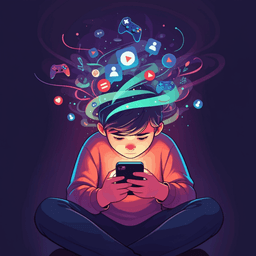
Spanish adolescents generally report positive digital well-being on TikTok, but higher usage undermines their ability to set time limits; girls spend more time and engage more with beauty and fashion while boys favor gaming and sports, reflecting persistent gendered patterns. The study highlights the need for parental controls and educational programs. This research was conducted by Clara Virós-Martín, Mireia Montaña-Blasco, and Monika Jiménez-Morales.... show more
Introduction

The study addresses rising concerns about adolescents’ mental health and the role of pervasive social media use, situating digital well-being as a key construct reflecting a balanced integration of digital connectivity into daily life. Prior work shows mixed and often inconclusive links between social media use and well-being, with critiques of overreliance on undifferentiated screen-time metrics. Scholars argue for platform-specific, activity-specific, and context-sensitive approaches. In Spain—where adolescent mental health problems and problematic social media use are reported as comparatively high and TikTok is especially popular among minors—the authors investigate how Spanish adolescents use TikTok (time and content consumed) and how this relates to their self-perceived digital well-being. They also test for gender differences, given evidence that social media may affect girls more strongly. The research questions examine patterns of use (RQ1), self-perceived digital well-being on TikTok (RQ2), gender differences (RQ3), and associations between TikTok use and digital well-being (RQ4).

Literature Review

The literature highlights increasing adolescent mental health concerns post-COVID-19 and identifies social media use as a potential risk factor, especially among girls. Digital well-being has evolved from a focus on cumulative effects of technology to a dynamic, subjective balance of benefits and drawbacks of connectivity (Vanden Abeele), with operationalizations including emotional resilience, agency, social connection, and communion (Prakash). Evidence linking social media use to well-being is mixed: effects may differ by short- vs long-term outcomes, intensity of use, motivations, and activity type (active vs passive). Indiscriminate measures like total screen time may obscure effects; platform-specific features matter. TikTok differs from other platforms by its algorithmic, entertainment-centric and often passive consumption model. Prior findings associate passive use on other platforms with poorer subjective well-being, but TikTok-specific evidence is scarce. Gendered patterns of use and content preferences are documented, with suggestions of persistent traditional roles (e.g., boys: gaming/sports; girls: beauty/fashion). Spain has high rates of adolescent social media problems and heavy TikTok use, underscoring the need for a Spain-focused, platform-specific study that moves beyond time to consider content types and their relation to digital well-being.

Methodology

Design: Quantitative cross-sectional online survey assessing self-reported TikTok use and digital well-being among adolescents in Spain. Sampling and participants: Stratified random sampling across Spain conducted by ODEC. Initial N=1043 adolescents aged 12–18; non-TikTok users were excluded (29.34%: 173 male, 133 female), yielding N=737 TikTok users (male n=343, 46.54%; female n=394, 53.46%). Mean age=14.21 years (SD=1.40). Sampling targeted representativeness by autonomous communities and municipality size, with final selection stratified by gender and age. Sample size targeted 95% confidence (Z=±1.96), precision d=3%, pq=50%, using Spanish population data (INE, 2023/2024). Procedure: Self-administered online questionnaire (sections: sociodemographics; TikTok use; digital well-being). Fieldwork: 24 April–6 May 2024. Informed consent obtained; data security per UNE EN ISO/IEC 27001; ethical approval UOC CE24-PR05. Measures:

  • TikTok time of use: Self-reported daily average, 6 categories: Up to 10 min; 11–30; 31–60; 61–90; 91–120; 121+ minutes.
  • TikTok content consumption: Frequency (1=Never to 5=Always) for 20 content categories adapted from Schneuing (2023): comedy; dance/lip-sync; influencers/streamers news; music; books/films/TV/reality; video games; travel; leisure; professional sports; beauty; fashion; food; fitness; medicine; psychology; other well-being-related; tutorials; current news; various knowledge; plus an open-ended ‘other’ option.
  • Digital well-being on TikTok: Adapted Prakash (2023) scale to TikTok context. Original 4 dimensions (emotional resilience, agency, social connection, communion; 13 items) translated to Spanish. Exploratory factor analysis (EFA) conducted due to adaptation: Bartlett’s χ²(78)=3363.65, p<0.001; KMO=0.83. Varimax rotation, Principal Axis extraction yielded 3 factors explaining 60.46% variance: Factor 1 (emotional resilience items), Factor 2 (agency items), Factor 3 (social connection and communion items combined). Reliability: α=0.79 (emotional resilience), α=0.82 (agency), α=0.83 (social connection and communion). Responses 1–5 (strongly disagree to strongly agree); higher=better digital well-being. Data analysis: IBM SPSS 25. Descriptives (means, SDs); gender differences via Pearson’s chi-square (time category) and independent-samples t-tests (content frequencies; digital well-being dimensions). One-way ANOVA tested time-of-use effects on digital well-being (Scheffé post hoc). Pearson correlations examined associations between content types and digital well-being dimensions. α=0.05 for all tests.
Key Findings

TikTok time of use (N=737): The most frequent categories were 31–60 min/day (21.30%) and 121+ min/day (20.22%). Gender differences were significant: χ²(5, N=737)=15.30, p=0.01. Adjusted residuals indicated girls were overrepresented in 121+ min (male=53, female=96; Z=±3.0, p<0.001), while boys were overrepresented in Up to 10 min (male=33, female=19; Z=±2.5, p=0.01). Content consumption patterns: Overall most consumed categories were comedy (M=3.30, SD=1.10), music (M=3.18, SD=1.06), influencers/streamers news (M=2.89, SD=1.10), and dance/lip-sync (M=2.72, SD=1.15). By gender, boys most consumed: comedy (M=3.50, SD=1.03), video games (M=3.19, SD=1.25), music (M=3.06, SD=1.06), professional sports (M=3.01, SD=1.30). Girls most consumed: comedy (M=3.24, SD=1.09), music (M=3.22, SD=1.04), fashion (M=3.02, SD=1.13), beauty (M=3.00, SD=1.18). Independent-samples t-tests showed significant gender differences (p<0.05) with boys higher for comedy, video games, professional sports; girls higher for dance/lip-sync, music, travel, leisure, beauty, fashion, food, psychology, and other well-being-related content (see Table 2 in article for full statistics; many p-values <0.001). Digital well-being levels: Means were emotional resilience M=3.31 (SD=0.60), agency M=3.22 (SD=0.91), social connection and communion M=3.64 (SD=0.57). No significant gender differences: emotional resilience t(735)=0.15, ns; agency t(735)=-1.05, ns; social connection and communion t(735)=-1.79, ns. Time-of-use effects on digital well-being: One-way ANOVA significant only for agency: F(5,731)=7.48, p<0.001. Scheffé post hoc: 121+ min users (M=2.93, SD=0.98) had significantly lower agency than Up to 10 min (M=3.53, SD=0.82), 11–30 min (M=3.47, SD=0.85), and 31–60 min (M=3.33, SD=0.82) groups, indicating reduced ability to set boundaries with longer use. Content–digital well-being correlations: Generally small but significant positive associations. Emotional resilience correlated most with music (r=0.16, p<0.01), books/films/TV/reality (r=0.16, p<0.01), travel (r=0.16, p<0.01), various knowledge (r=0.16, p<0.01). Agency correlated with various knowledge (r=0.14, p<0.01), books/films/TV/reality (r=0.13, p<0.01), travel (r=0.12, p<0.01), leisure (r=0.11, p<0.01). Social connection and communion correlated with fashion (r=0.14, p<0.01), comedy (r=0.13, p<0.01), beauty (r=0.12, p<0.01), dance/lip-sync (r=0.12, p<0.01).

Discussion

Findings address the research questions by detailing Spanish adolescents’ TikTok use patterns, demonstrating significant gender-based differences in both time and content consumed, and showing that self-perceived digital well-being on TikTok is generally positive across emotional resilience, agency, and social connection/communion. Contrary to expectations from broader social media literature, digital well-being did not differ by gender despite girls’ heavier use, suggesting potential platform-specific dynamics for TikTok’s largely passive, entertainment-focused consumption. However, heavier use was associated with lower agency to limit time, aligning with concerns about infinite scroll and problematic use. Content patterns mapped onto gendered interests reflecting traditional roles (boys: gaming/sports; girls: beauty/fashion) and showed small positive links between culture-related content and higher emotional resilience/agency, and between fashion/beauty/comedy/dance trends and higher social connection/communion—possibly reflecting community-building around shared codes and trends. The results underscore the importance of moving beyond undifferentiated screen time to include platform and content specifics when assessing digital well-being.

Conclusion

The study contributes Spain-specific, platform-focused evidence on adolescent TikTok use and digital well-being. About 35% of teens spend >90 minutes daily, with entertainment-oriented content (comedy, music, influencers, dance/lip-sync) most viewed. Teens reported generally positive digital well-being on TikTok across emotional resilience, agency, and social connection/communion, with no gender differences. Significant gender differences emerged in usage duration and content preferences, consistent with traditional gendered interests. Longer daily use (>120 minutes) was linked to lower agency for setting limits. Content type showed small positive associations with digital well-being dimensions, suggesting culture-related content may support emotion management and agency, while fashion/beauty/comedy/dance trends may relate to social connection/communion. Future research should: (1) use objective time-use measures; (2) incorporate user motivations and affect; (3) examine platform-specific pathways linking use, problematic use/addiction, subjective well-being, and mental health outcomes; and (4) test generalizability beyond Spain. Practice and policy may consider calibrated time-limiting strategies (defining ‘moderate use’ culturally), parental controls and guidance, algorithmic audits to reduce addictive features, and educational programs promoting healthy digital habits.

Limitations

Generalizability is limited by the Spain-only sample and by treating digital well-being as a sociocultural construct that may vary by context. Self-reported time-of-use likely underestimates actual use, reducing measurement validity. Although content type was assessed, other influential factors (e.g., motivations, feelings during use) were not measured, potentially omitting key moderators/mediators. The cross-sectional design precludes causal inference.

Listen, Learn & Level Up
Over 10,000 hours of research content in 25+ fields, available in 12+ languages.
No more digging through PDFs, just hit play and absorb the world's latest research in your language, on your time.
listen to research audio papers with researchbunny