
PsychologyPNAS
Brain decoding of spontaneous thought: Predictive modeling of self-relevance and valence using personal narratives
H. J. Kim, B. K. Lux, et al.
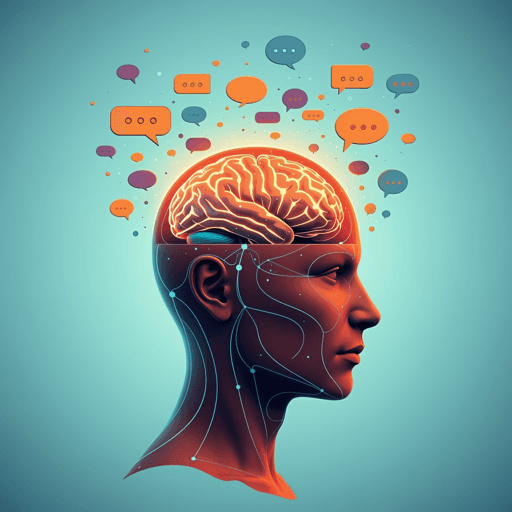
Using personalized story-reading and fMRI, this study decodes two core dimensions of spontaneous thought—self-relevance and valence—revealing contributions of default mode, ventral attention, and frontoparietal networks and specific regions like the anterior insula and TPJ. This research was conducted by Authors present in <Authors> tag.
Related Publications
Explore these studies to deepen your understanding
Adjacent work that informs or extends this paper's methodology and findings.
Psychology
Brain decoding of spontaneous thought: Predictive modeling of self-relevance and valence using personal narratives
H. J. Kim, B. K. Lux, et al.

Psychology
Predictive modeling of religiosity, prosociality, and moralizing in 295,000 individuals from European and non-European populations
P. O. Jacquet, F. Pazhoohi, et al.
Psychology
Prolonged exertion of self-control causes increased sleep-like frontal brain activity and changes in aggressivity and punishment
E. Ordali, P. Marcos-prieto, et al.
Psychology
Prolonged exertion of self-control causes increased sleep-like frontal brain activity and changes in aggressivity and punishment
E. Ordali, P. Marcos-prieto, et al.


