Engineering and Technology
All-day fresh water harvesting by microstructured hydrogel membranes
Y. Shi, O. Ilić, et al.
The study addresses global water scarcity by integrating two complementary water-harvesting mechanisms—interfacial solar steam generation for daytime desalination/purification and fog collection for nighttime capture—into a single material system. Conventional interfacial solar evaporators are limited to periods of sufficient solar irradiation and are fundamentally constrained by solar energy density. Fog collection, often implemented with polymer meshes, suffers from droplet re-entrainment and clogging. The research question is whether a single, microstructured, hydrophilic hydrogel membrane can be engineered to efficiently capture and drain fog droplets at night while also enhancing daytime photothermal evaporation through improved light absorption, thermal management, and vapor transport, thereby enabling continuous 24-hour freshwater production. The work proposes a PVA/PPy hydrogel membrane with bioinspired, hierarchical micro-tree topologies to increase surface area, promote directional droplet transport, manage local temperature and humidity, and maximize light-to-heat conversion at the interface.
Interfacial solar steam generation has been advanced using nanostructured carbons, plasmonic absorbers, ceramics, and hydrogels to improve light absorption, heat localization, water transport, and reduce effective evaporation enthalpy. Prior PVA/PPy hydrogel evaporators achieved vapor generation rates around 3.2 to 3.6 kg m−2 h−1 via enhanced water transport and modified water state with highly hydratable polymers or light-absorbing fillers. However, such systems operate only under sunlight. Fog collection traditionally uses polymer meshes but faces efficiency losses from droplet re-entrainment and pore clogging. Bioinspired systems based on cactus spines and other natural motifs, implemented in metals, oxides, and polymers, offer improved droplet transport but lack integrated photothermal functionality. The literature suggests an opportunity to combine hydrophilic, processable hydrogels with bioinspired surface microstructures to achieve both fog harvesting and solar evaporation within one device.
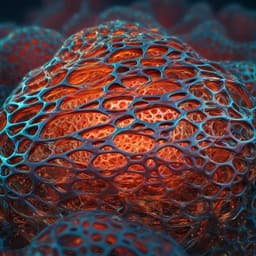
Design and fabrication: A PVA/PPy hydrogel membrane was engineered with a surface array of hierarchical, cactus-spine-inspired micro-trees composed of a conical trunk bearing nine tilted conical branches (at 1/3, 1/2, and 2/3 of height). Typical dimensions: projected area ~5.5 cm2 containing 100 hexagonally arranged micro-trees; tree height ~4 mm; base diameter ~0.8 mm; smallest tip dimension ~20 µm. Structure CAD was printed via stereolithography (PR48 resin) to create masters, followed by double-inverse molding with PDMS and casting PVA/PPy hydrogel using vacuum-assisted filling. Hydrogels underwent room-temperature gelation, purification in DI water, and multiple freeze-thaw cycles (−20 °C for 2 h, then 30 °C water bath) to finalize structure. Materials synthesis: PPy nanoparticles were synthesized by rapid oxidative polymerization of pyrrole with ammonium persulfate in 1.2 M HCl, followed by washing and redispersion. PVA/PPy precursor solution (10 wt% PVA mixed with 10 wt% PPy, plus glutaraldehyde crosslinker and HCl) was prepared by sonication. Characterization: Morphology by SEM; FTIR for composition; Raman to assess water bonding states; UV–vis–NIR integrating sphere for absorption (250–2500 nm); contact angle measurements; rheology; stability tests over 20 months. Fog collection tests: In-lab setup with a 4 cm2 membrane inclined at 45°, exposed to a sustained artificial fog from an ultrasonic humidifier (~1 m s−1 flow, 15° incidence relative to surface tangent, outlet 3 cm from sample). Room temperature 25 °C, fog RH ~100%. Water drained into a beaker; mass recorded every 15 min. Geometric variants (trees, cones, cylinders, flat) and apex angle (sinα from 0.24 to 0.10) were tested; normalization by projected and total surface area. Solar steam generation tests: Membrane floated on water and irradiated with 1 sun (AM1.5, 100 mW cm−2) using a calibrated solar simulator. After 10 min pre-irradiation to reach steady temperature, mass loss measured every 10 min for 1 h; dark evaporation subtracted. Variants of micro-topologies and support thickness were tested. Energy efficiency η = m hγ / (Copt P0) computed using measured mass flux and evaporation enthalpy; evaporation enthalpy in hydrogels evaluated by controlled evaporation and DSC, corroborated by Raman. Modeling and analysis: COMSOL simulations of light absorption patterns and surface temperature distributions for different micro-topologies; energy balance of irradiation, convection, radiation, evaporation, and losses to bulk water; assessment of local humidity and vapor escape influenced by shape factor and inter-feature pitch. Outdoor prototypes: Rooftop device with 55–126 cm2 gel membranes in a holder, operating in daytime desalination (8:00–20:00) and nighttime fog collection (20:00–8:00). Solar irradiance recorded hourly; environmental parameters logged. A floating prototype with a foldable cover and fabric wicks for daytime condensation and open-top nighttime fog capture was also built and tested in a garden pool.
- Fog harvesting: Micro-tree PVA/PPy membranes achieved a saturated fog collection rate of ~5.0 g cm−2 h−1 (normalized by projected area). The collection cycle (nucleation, growth, coalescence, drainage) repeats with ~20 s periodicity. Micro-tree arrays outperformed other geometries: 34% higher than flat, cones 17% higher than flat, cylinders 29% lower than flat when normalized by total surface area. Lower apex angle (sinα from 0.24 to 0.10) increased cone array collection rate by 14.7%. Compared to commercial meshes and a cactus stem, micro-trees showed 115% higher areal collection than double-layered Raschel mesh and 61% higher than cactus stem. Hydrophilic surfaces (contact angle ~65°) promoted nucleation; hydrophobic PR48 replicas (contact angle ~128°) had 65% lower rates. Arrays also reduced fog flow speed locally, enhancing deposition while requiring tuning to facilitate drainage. - Solar steam generation: Under 1 sun, micro-tree membranes reached an evaporation rate of 3.64 kg m−2 h−1 (7.1× free water; 14.1% higher than flat hydrogel), with energy efficiency up to ~96%. All gel types exhibited >90% absorption; micro-trees had the highest across 250–2500 nm. Microstructures affected surface temperatures: cones and micro-trees maintained higher average surface temperatures (~27.5–28.0 °C) than cylinders (which absorbed primarily on top faces), aiding evaporation. Conical geometries facilitated vapor escape and maintained performance across feature spacing, whereas closely packed cylinders suffered a 15.5% performance drop when spacing was halved. - Durability: Fog collection and solar evaporation performance remained stable after more than 20 months of storage. - Outdoor performance: Rooftop tests in Pasadena with average solar flux ~1 kW m−2 yielded ~150 mL in daytime and ~35 mL at night for 55–126 cm2 areas, corresponding to ~28 L m−2 (daytime) and ~6 L m−2 (nighttime). Overall daily yield ~34 L m−2. Average system energy efficiency in the rooftop setup was ~50%, limited by reduced sunlight input and saturated internal humidity. Fog yields varied with weather; cloudy nights achieved ~10 L m−2. A floating prototype produced ~240 mL in one day from ~126 cm2.
The results demonstrate that integrating hierarchical conical micro-topologies into a hydrophilic PVA/PPy hydrogel membrane enables continuous 24-hour freshwater harvesting by coupling efficient fog capture at night with high-rate solar interfacial evaporation during the day. The micro-tree architecture addresses key transport bottlenecks: it increases active hydrophilic area for droplet nucleation, imparts Laplace-pressure-driven directional droplet motion for rapid surface regeneration, and manages airflow to enhance deposition yet allow drainage. For daytime operation, the geometry improves light absorption and thermal distribution across the 3D surface, sustaining higher local temperatures and promoting vapor escape by reducing flow resistance relative to cylinders. These combined effects yield near-unity photothermal energy efficiency and best-in-class evaporation rates among hydrogel-based systems, while also surpassing commercial fog meshes in collection efficiency. The findings validate that surface structure engineering—particularly conical, branched arrays—can simultaneously optimize optical, thermal, and mass transport processes crucial to both fog harvesting and interfacial evaporation, offering a pathway to practical, around-the-clock water harvesting solutions.
This work introduces a bifunctional PVA/PPy hydrogel membrane with bioinspired hierarchical micro-tree topologies that harvests fresh water day and night by uniting fog collection and interfacial solar steam generation. The membrane achieves a fog collection rate of ~5.0 g cm−2 h−1 and a solar evaporation rate of 3.64 kg m−2 h−1 at 1 sun with ~96% energy efficiency, remains durable over at least 20 months, and delivers outdoor daily yields of ~34 L m−2. The study identifies conical, branched microstructures as optimal for maximizing hydrophilic surface area, enhancing light absorption, maintaining favorable surface temperatures, and facilitating vapor escape. The fabrication approach is scalable via molding replication of 3D-printed masters. Future work could optimize system-level designs (transparent, thermally managed covers; improved condensation; adaptive opening/closing; remote control), integrate cooling to boost condensation, refine micro-topology and spacing for various climates, and extend the strategy to other advanced hydrogel or photothermal materials to further improve efficiency and robustness.
- The hydrogel membranes collect fog via surface droplet capture and do not passively condense or absorb water vapor at moderate relative humidity (50–90%); performance depends on the presence of droplet-laden fog. - Outdoor system performance showed average energy efficiency around 50% due to reduced sunlight and saturated humidity inside the closed prototype, indicating system-level condensation and ventilation constraints. - Fog harvesting yields vary significantly with local weather conditions (e.g., cloudiness, fog density, wind). - Closely packed non-conical geometries (e.g., cylinders) can trap vapor and reduce evaporation, highlighting sensitivity to feature shape and spacing. - Reported fog collection rates are normalized by projected area; translation to practical areal yields depends on device scale, drainage design, and deployment environment.
Related Publications
Explore these studies to deepen your understanding of the subject.