
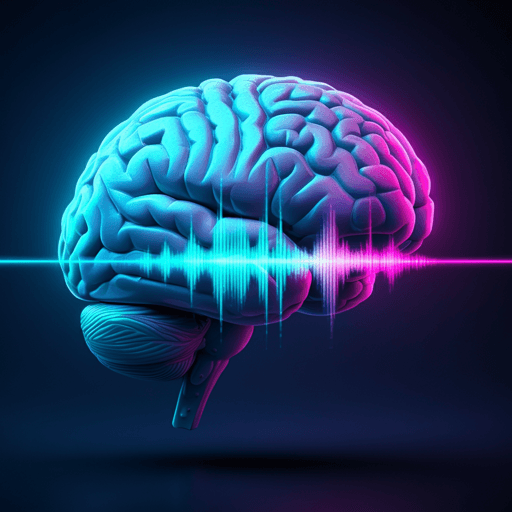
Engineering and TechnologyNature Machine Intelligence
A neural speech decoding framework leveraging deep learning and speech synthesis
X. Chen, R. Wang, et al.
This study introduces a novel deep learning neural speech-decoding framework that pairs an ECoG decoder with a differentiable speech synthesizer and a speech-to-speech auto-encoder to produce interpretable speech parameters and natural-sounding speech. The approach is highly reproducible across 48 participants, yields high correlation even with causal operations suitable for real-time prostheses, and works with left or right hemisphere coverage. This research was conducted by Xupeng Chen, Ran Wang, Amirhossein Khalilian-Gourtani, Leyao Yu, Patricia Dugan, Daniel Friedman, Werner Doyle, Orrin Devinsky, Yao Wang, and Adeen Flinker.
Related Publications
Explore these studies to deepen your understanding
Adjacent work that informs or extends this paper's methodology and findings.

Engineering and Technology
A neural speech decoding framework leveraging deep learning and speech synthesis
X. Chen, R. Wang, et al.
Computer Science
A deep learning framework for gender sensitive speech emotion recognition based on MFCC feature selection and SHAP analysis
Q. Hu, Y. Peng, et al.
Medicine and Health
Design and Analysis of a Deep Learning Ensemble Framework Model for the Detection of COVID-19 and Pneumonia Using Large-Scale CT Scan and X-ray Image Datasets
X. Xue, S. Chinnaperumal, et al.

Engineering and Technology
A general and transferable deep learning framework for predicting phase formation in materials
S. Feng, H. Fu, et al.


