NGC Research Equipment Program 2026
📖 About the NGC Research Equipment Program
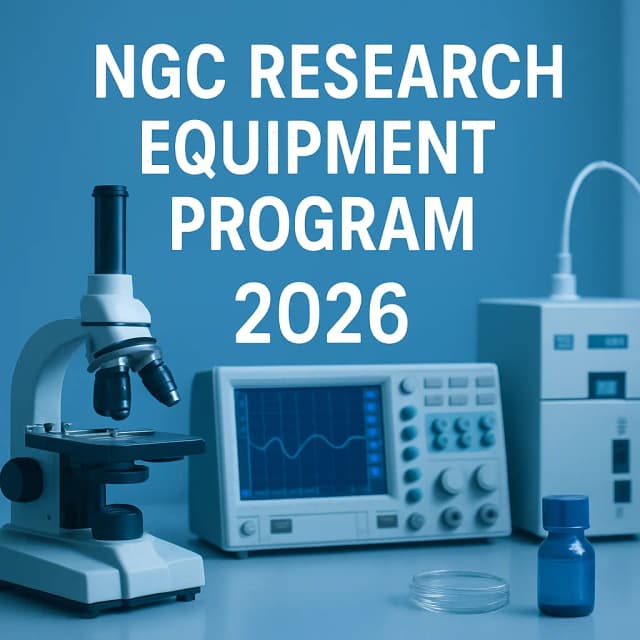
The Research Equipment Program provides essential scientific equipment to scientists and students in the American tropics to support their research and educational activities. Many researchers face challenges in accessing basic tools such as:
- Microscopes
- GPS units
- Mist nets
- Video cameras
- Binoculars
- Science textbooks
The program ensures that donated or purchased equipment is sent to Latin America at minimal expense. The goal is to make these resources broadly available for various projects, students, and researchers.
🎁 Benefits of the NGC Research Equipment Program
Research Impact
- Enables fieldwork and data collection that would otherwise be impossible.
- Improves research quality and continuity.
Education and Training
- Provides hands-on learning tools for students.
- Strengthens local scientific training environments.
Equity in Science
- Addresses resource gaps faced by Latin American researchers.
- Promotes inclusive participation in global science.
✅ NGC Research Equipment Program Requirements
To be eligible for the program, applicants must meet the following criteria:
- Be Latin American researchers.
- Be affiliated with:
- A university, or
- A conservation organization.
- Conduct research or education activities aligned with conservation and scientific capacity-building.
Note: While students may benefit from the equipment, applications must be submitted by affiliated researchers or research groups.
📅 Application Date and Process
- Application Deadline: 01 April, 2026
- To apply, visit the NGC Research Equipment Program Application Portal.
For more details, visit the NGC Research Equipment Program Overview.
This program is a fantastic opportunity to support conservation efforts and scientific research in Latin America. Don't miss the chance to make a meaningful impact!
- Enables fieldwork and data collection that would otherwise be impossible
- Improves research quality and continuity
- Provides hands-on learning tools for students
- Strengthens local scientific training environments
- Addresses resource gaps faced by Latin American researchers
- Promotes inclusive participation in global science