The acceptance email arrives on a Tuesday. You have a grant section due Friday, two lectures to prepare and a student waiting on comments. You know you should tell people about the paper, and you also know that "later" usually turns into never.
If that sounds familiar, you are in large company. In a study built on 97 interviews with academic biologists and physicists at top US research universities, Ecklund, James and Lincoln (2012) note that the barriers to outreach most often cited in earlier research were time, funding, knowledge, training and institutional disincentive. About 31 percent of their interviewees blamed the academy, and the authors sum up that prioritizing research and publications leaves scientists feeling they have little time for activities not directly connected to their academic work.
This post does not ask you to find more hours. It is a minimum routine for one paper that fits around a full week.
The Real Cost Is Starting Over
Advice on promoting a paper is not scarce. Wiley's author guide to article promotion, for example, suggests a shareable full-text link, a journal cover image, a video abstract, a plain language summary, social media posts, personal emails to colleagues, a strong academic profile, a press release through your institution, and institutional blogs and newsletters. Every item on that list is reasonable.
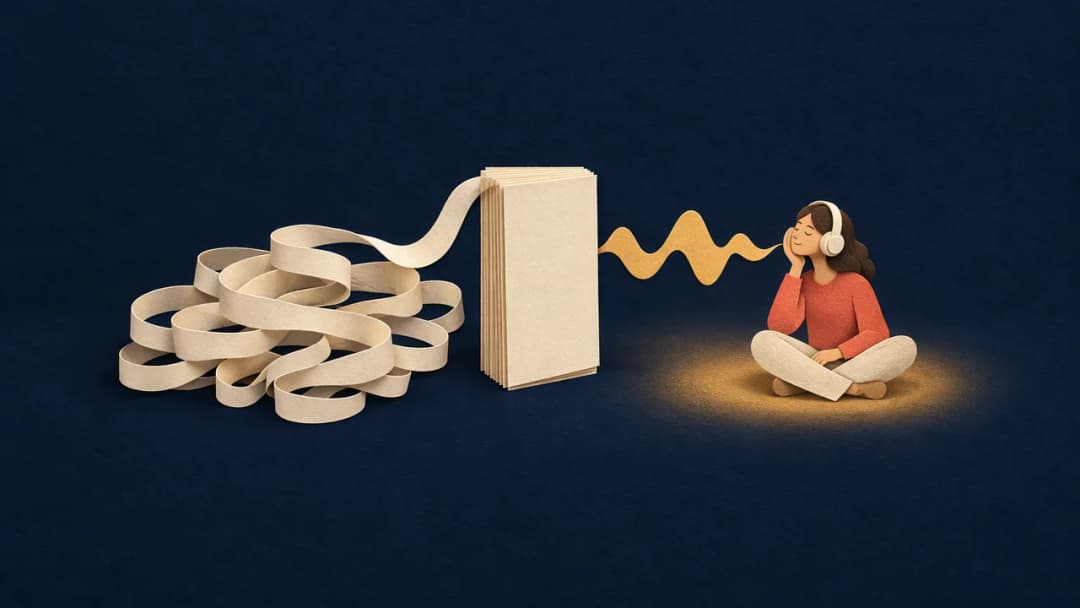
The trouble is that each one, done on its own, starts from a blank page. You reread your paper to remember how you would explain it, rewrite the finding for a new audience, and hunt for the figure again. That restarting is where the hours go.
So do the thinking once, write it down in one place, and from then on only copy and adapt.
Build One Asset Kit
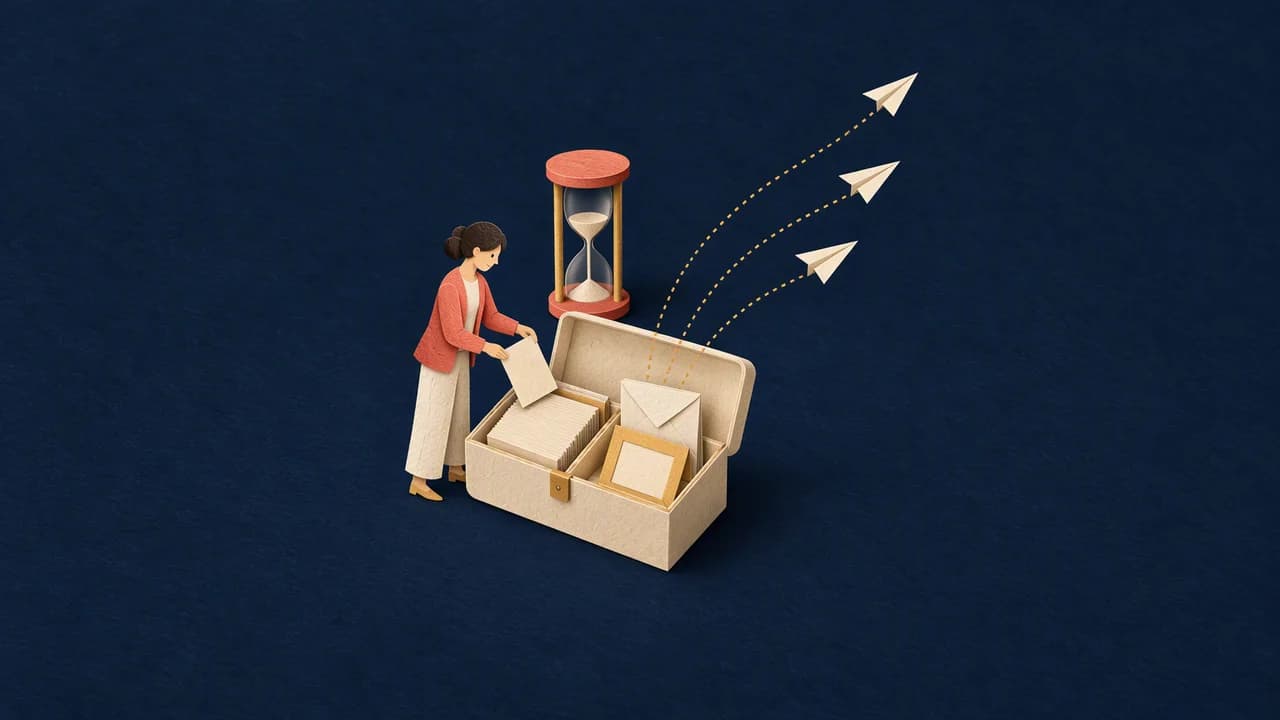
An asset kit is a single note or document that holds everything you will paste elsewhere. Write it in one sitting while the paper is still fresh in your head, ideally between acceptance and publication.
- One sentence: what you found, in words a neighbor would follow.
- Three sentences: the question, what you did, what you found.
- Why it matters: one line each for two audiences you actually care about.
- One limitation, in plain words, so nobody overstates the result for you.
- One figure or image you are allowed to share, with a one-line description of what it shows.
- The links: the DOI, a free-to-read version if you have one, and your profile page.
- Two or three questions people are likely to ask, with two-sentence answers.
Check your publishing agreement before you add a PDF or a figure to the kit, so that everything in it is something you may share.
Pick One or Two Channels You Already Use
Researchers reach people in very different ways. In a 2014 Pew Research Center survey of 3,748 US-based members of the AAAS, 51% had at least some contact with reporters about research findings, 47% used social media to talk about or read about science at least some of the time, and 24% blogged about science and research.
Nobody needs all of those for one paper. Pick the one or two places where people already know you, whether that is LinkedIn, a department newsletter, a mailing list or your faculty page, and use the kit there.
The Minimum Routine, in About Three Hours
The time budgets below are my suggestions for planning, not measured averages. Added up, they come to about two and a half hours across about three months, plus about 15 minutes each time you reuse the kit, and the biggest block is the first sitting.
| Moment | What you do | What you take from the kit | Suggested time |
|---|---|---|---|
| Acceptance | Write the kit | (the paper itself) | 60 to 90 minutes |
| Publication day | Update your profile or publication list and write one post | One sentence, figure, links | 20 minutes |
| Same week | Personal email to 5 to 10 people who would care | Three sentences, why it matters, links | 30 minutes |
| Week two | Send the kit to your press or communications office | The whole kit | 10 minutes |
| Months one to three | Reuse it in a talk slide, a grant report or a reply to a question | Limitation, likely questions | About 15 minutes each time |
For the publication-day post, the LinkedIn post templates for a research paper slot straight onto the kit: the one sentence becomes the hook and the figure goes in the post.
Worked Example: One Sitting for a Psychology Paper
Say you have a made-up psychology paper on sleep and exam recall in undergraduates. The kit might start like this.
- One sentence: "Students who slept less than usual the night before an exam recalled less of what they had studied."
- Three sentences: "We asked whether a short night before an exam relates to recall. We followed undergraduates through one term and compared their self-reported sleep with quiz scores. On nights with less sleep than usual, recall the next morning was lower."
- Why it matters: for instructors, exam timing; for student services, sleep advice during exam weeks.
- Limitation: "This was one university and sleep was self-reported, so it shows a link, not a cause."
- Likely question: "Does this mean all-nighters never help?" with a two-sentence answer drawn from the discussion section.
On publication day, the post is the one sentence, the figure and the link. The emails are the three sentences plus one personal line for each person. The press office gets the whole kit and can decide for itself. Nothing is written twice.
What to Skip Without Guilt
- Starting a new channel just for one paper.
- Posting every day about the same result.
- Making a separate, custom asset for every platform.
- Checking the numbers daily. Look once, when you need them for a report or for the next paper.
If you later find a free week, the 30-day plan for promoting a research paper builds on the same material.
Where Amplify Fits
The kit is the part only you can write. The formats that usually fall off a full week are the heavy ones: a video, a vertical short, an audio version and an infographic.
Amplify makes all four from one paper in one order, at one price, with no subscription. It works from the PDF you upload and nothing else, and every artifact carries the title, the authors and a link back to the paper of record. Each format arrives as three variants that you can edit line by line, a subject-matter reviewer reads every draft, every claim is traced to a page in the PDF, and nothing publishes until you approve it.
To put the result where people already look, the embeddable widget needs one script tag per page and one marker per paper, takes about four minutes per site, and needs no IT ticket. The analytics show reads, listens, questions asked, languages, and which format moved people, which is useful when the grant report comes due.
Communicating a paper does not have to be a second job. Write the kit once, give it two or three good moments, and let the same few sentences do the work.