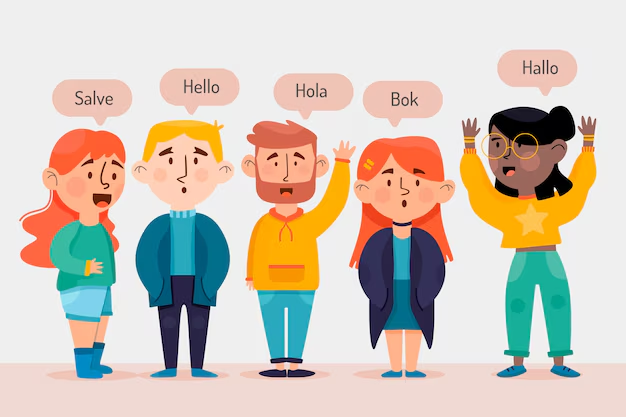
Guess what? We’re officially multilingual. About time, right?
Every day, thousands of research papers, reports, and insights remain inaccessible simply because they are not available in the right language. The research world is vast, but language barriers create gaps in collaboration, understanding, and impact.
This language gap doesn’t just affect access; it affects equity. Researchers from non-English-speaking regions face additional challenges in publishing, peer recognition, and collaboration. Valuable insights may go unnoticed simply because they are not shared in the "right" language.
Language should not be a barrier to knowledge, it should be a bridge. With over half of the world’s population speaking a language other than English, research needs to be more inclusive and adaptable. ResearchBunny speaks multiple languages!
The Tangible Challenges Faced by Researchers
- Lost Potential: Groundbreaking studies, often published in languages other than English, remain unread and underutilised, stifling innovation.
- Limited Reach: Non-English-speaking researchers struggle to share their valuable work and discover relevant insights from their peers, isolating them from the global academic community.
- Hindered Collaboration: Global collaboration, a cornerstone of modern research, is severely hampered when researchers cannot easily communicate and share findings across language barriers.
- Restricted Impact: Critical insights and discoveries fail to reach the individuals and communities who need them most, limiting their potential to drive positive change.
- Global majority isolation: With over half of the world's population predominantly speaking languages other than English, there is a clear and pressing need for research to become more inclusive and linguistically adaptable.
Why Did We Introduce Multilingual Support?
Language is one of the most persistent and overlooked barriers in global research. While English dominates academic publishing, a significant portion of groundbreaking work, especially in the social sciences, environmental studies, and local innovations, originates in other languages and often remains underrepresented in mainstream discourse.
ResearchBunny was designed to simplify research, improve outreach, and build a strong community. But to truly empower researchers everywhere, we had to take it a step further, by making the platform accessible in multiple languages.
Our goal is simple;
1. Break language barriers and make research accessible to all.
2. Support researchers in their languages for better engagement. 3. Increase visibility of research across different regions and communities.
How we built it: BTS of our multilingual feature
Implementing a multilingual experience wasn’t just about translating text. It required careful planning to ensure accuracy, cultural relevance, and usability.
Here’s how we did it:
- Step 1: Identifying Key Languages - We started by analysing our user base to determine the most commonly used languages. Our goal was to prioritise languages that would have the biggest impact on accessibility.
- Step 2: AI + Human Translation for Accuracy - We used AI-powered translation models combined with human review to ensure that translations were not just literal but also contextually accurate. Research terms often have precise meanings, so we had to be meticulous.
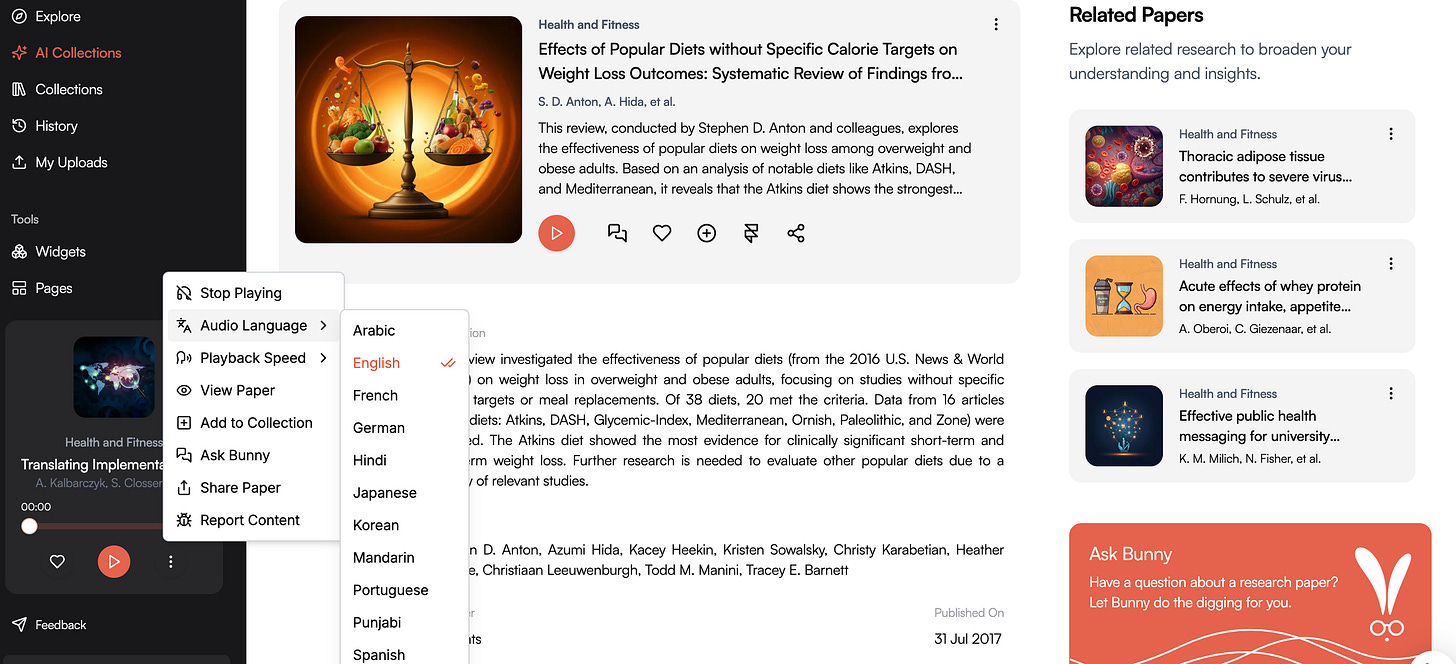
- Step 3: Seamless User Experience - A multilingual feature isn’t just about words, it’s about how users interact with the platform. We designed an intuitive language-switching option to make it easy for users to switch between languages effortlessly.
Inclusivity at Our Core
At ResearchBunny, inclusivity isn’t just a buzzword, it’s our driving force.
Breaking these barriers is not just about translation, it's about inclusion. Multilingual platforms, language-accessible journals, and localised research communities are emerging to bridge this divide. Encouraging citation of non-English sources, offering multilingual submission options, and recognising the legitimacy of regional scholarship are critical steps toward a more inclusive academic landscape.
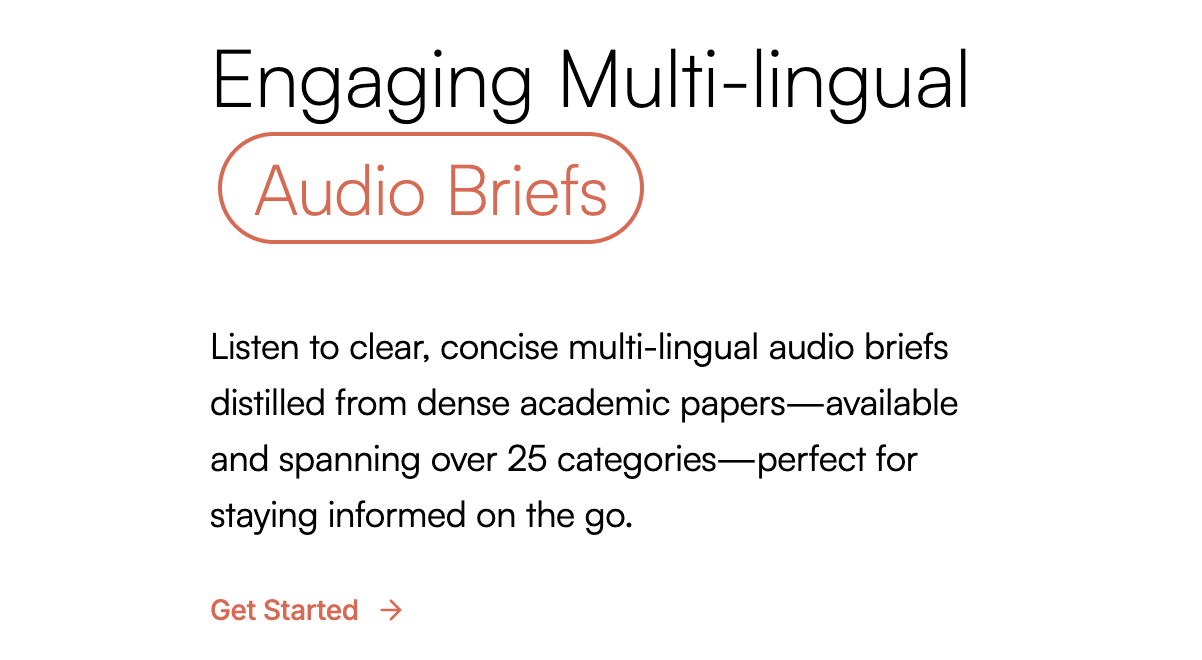
We believe that access to knowledge should be universal, unrestricted by language. That’s why we’ve introduced our multilingual feature, ensuring researchers, students, and professionals worldwide can engage with our platform in their preferred language.
The Impact: A More Inclusive Research Community
By making ResearchBunny multilingual, we’re doing more than adding a feature, we’re fostering a movement toward global research accessibility.
1. Increased engagement from non-English-speaking researchers. 2. Stronger collaborations across different language communities. 3. Greater impact of research beyond linguistic limitations.
This is just the beginning. We’re continuously improving and expanding our multilingual capabilities based on user feedback. Join us in making research truly global. Try out our multilingual feature today, it is free forever, and help us build a future where knowledge knows no boundaries! When we remove linguistic limitations, we don’t just widen access, we unlock new perspectives, enrich global dialogue, and move closer to a truly collaborative research ecosystem.
What’s Next? Your Voice Matters!
We’d love to hear from you! If there’s a language you’d like to see added, or if you have suggestions on how we can make ResearchBunny even better, let us know.